
Recipe archive
Loading
Setting the table...
Fetching the latest recipes from the archive.
Loading
Fetching the latest recipes from the archive.
Recipe archive
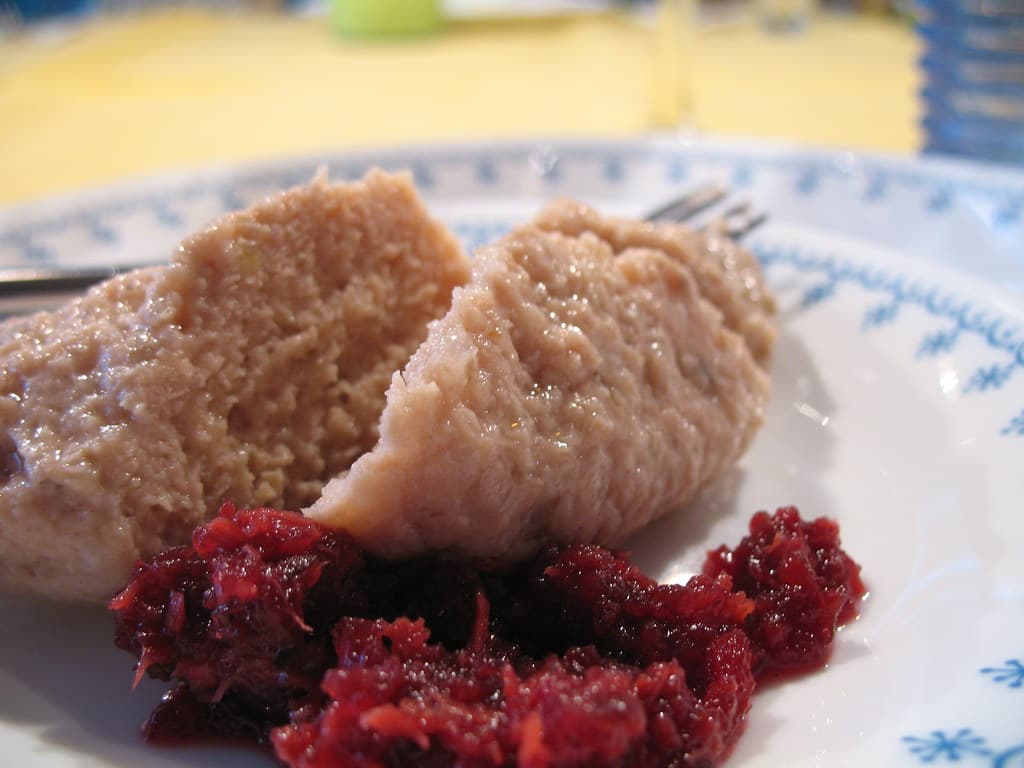
1861-1900 - Jewish-American immigrant communities
Gefilte fish is a traditional Jewish dish consisting of poached fish patties or balls made primarily from white fish, often served chilled with horseradish. Immigrant Jewish communities brought this economical yet elegant recipe to America during the late 19th century, where it remains a hallmark of Jewish-American cuisine, especially for holidays.
Community-powered photos. Reviewers can upload dish photos, and the highest-rated community image may be featured here.
Difficulty
Hard
Prep time
30 minutes
Cook time
1 hour 15 minutes
Total time
1 hour 45 minutes
Servings
6 servings
Region
New York City Jewish appetizing and holiday kitchens
Era introduced
1861-1900
Introduced by
Jewish-American immigrant communities
Recipe tools
Log in to save this recipe to a collection.
Gefilte fish entered American Jewish cuisine primarily through immigrants from Eastern Europe who settled in the United States between 1861 and 1900. This dish was developed as a way to prepare certain freshwater fish economically by grinding and shaping into patties or balls, which were then poached and served often with a sweet carrot topping and horseradish. It became synonymous with Shabbat and Jewish festival meals, preserving cultural heritage in a new homeland.
Share family changes, regional twists, or pantry-friendly adaptations as full community recipes.
Log in to submit a community recipe.
No community recipes yet. Submitted recipes are published right away.
Rate this recipe and share how it worked at your table.
Log in to review this recipe.
No reviews yet. Be the first to rate this recipe.
Recipes matched by era, region, occasion, ingredients, and cultural roots from the archive.
Same era
America's Melting Pot
Army Bean Soup photo coming soon
1861-1900
A hearty military-style bean soup built on navy beans, smoked ham hock, onion, celery, carrot, and bay leaf, adapted for a home pot from large-batch service traditions.

1861-1900
A basic homemade bagel recipe using high-protein flour, malt or brown sugar, a short boil, and a hot bake for chewy New York-style results.
America's Melting Pot
Bagels with Schmear photo coming soon
1861-1900
A deli-style bagel with a thick schmear of plain or scallion cream cheese, with optional onion, capers, tomato, and cucumber.
Same region
America's Melting Pot
Bagel and Lox photo coming soon
1900-1929
A toasted bagel layered with cream cheese, lox, red onion, capers, tomato, and dill in the New York appetizing-shop tradition.
1861-1900
A basic homemade bagel recipe using high-protein flour, malt or brown sugar, a short boil, and a hot bake for chewy New York-style results.
America's Melting Pot
Bagels with Schmear photo coming soon
1861-1900
A deli-style bagel with a thick schmear of plain or scallion cream cheese, with optional onion, capers, tomato, and cucumber.
Same table
America's Melting Pot
Lutefisk photo coming soon
1861-1900
Lutefisk is a preserved whitefish dish made by soaking dried cod or whitefish in lye and water, then rinsing and cooking it before serving. Brought by Scandinavian immigrants settling the Midwest during the late 19th century, lutefisk remains a holiday tradition, especially at Christmas, reflecting the cultural preservation of heritage foods amid American immigrant history.
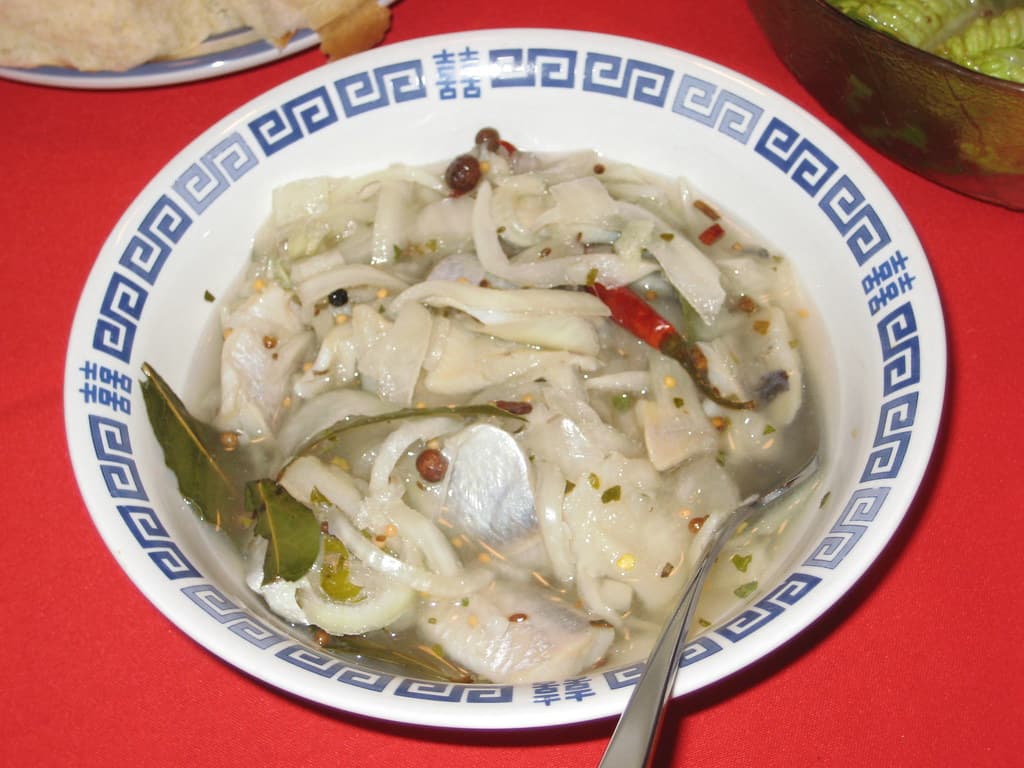
1861-1900
Pickled herring is a classic dish in Scandinavian-American households, especially in the Midwest, served during holidays and celebrations from the mid-19th century onward. The fish is cured and pickled with vinegar, sugar, and spices for a flavorful side or appetizer.
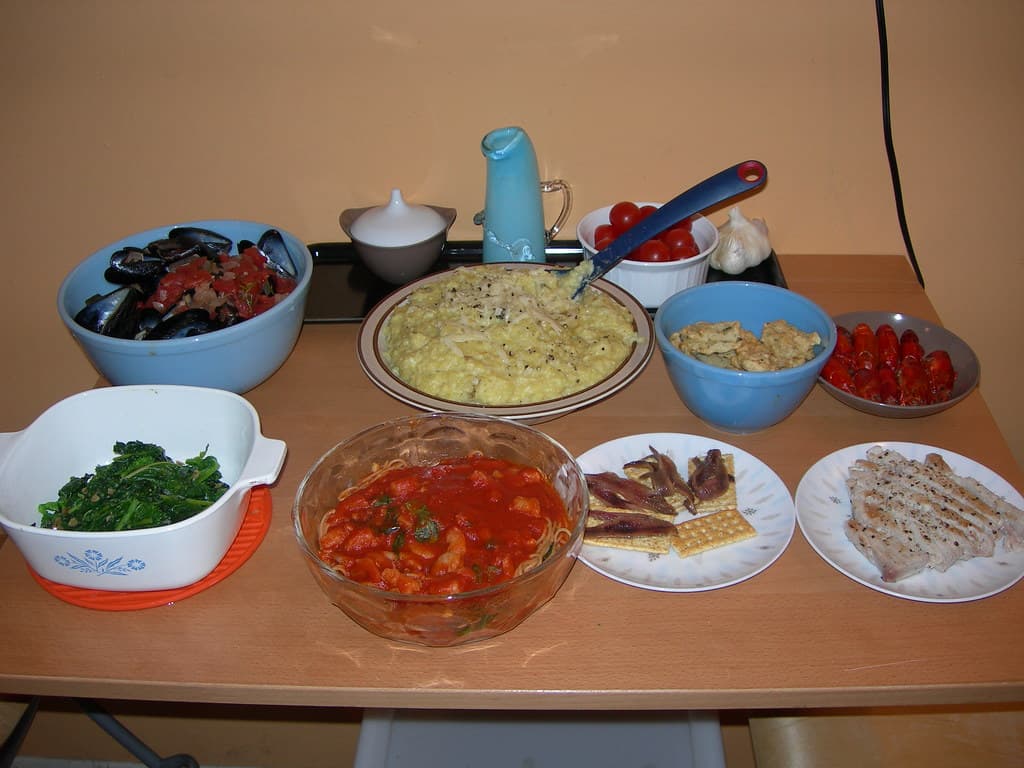
early 1900s-present
The Feast of the Seven Fishes is a traditional Italian-American Christmas Eve celebration featuring seven different seafood dishes. Rooted in Italian Catholic fasting customs, it has evolved into a special communal meal enjoyed throughout the United States across eras as part of holiday traditions.