
Recipe archive
Loading
Setting the table...
Fetching the latest recipes from the archive.
Loading
Fetching the latest recipes from the archive.
Recipe archive
America's Melting Pot
Meatless Loaf hero image coming soon
1930-1945 - American home cooks during World War II rationing
A savory meatless loaf made using vegetables, cereals, and binders to substitute for meat during wartime rationing. Reflects home front innovation during World War II to stretch limited protein resources.
No featured photo yet. Upload a photo with your review. The highest-rated community photo may become this recipe's hero image.
Difficulty
Medium
Prep time
20 minutes
Cook time
1 hour
Total time
1 hour 20 minutes
Servings
6 servings
Region
Midwestern and Northeastern home-economics kitchens
Era introduced
1930-1945
Introduced by
American home cooks during World War II rationing
Recipe tools
Log in to save this recipe to a collection.
During World War II, meat shortages and rationing prompted American home cooks to develop meatless recipes that conserved resources while providing satisfying meals. Meatless loaf combined inexpensive, readily available ingredients such as vegetables, grains, and eggs to simulate the texture and flavor of traditional meatloaf. This inventive dish aligned with government encouragement of victory gardens and ration-conscious cooking, highlighting the resourcefulness and adaptability of American households on the home front between 1939 and 1945.
Share family changes, regional twists, or pantry-friendly adaptations as full community recipes.
Log in to submit a community recipe.
No community recipes yet. Submitted recipes are published right away.
Rate this recipe and share how it worked at your table.
Log in to review this recipe.
No reviews yet. Be the first to rate this recipe.
Recipes matched by era, region, occasion, ingredients, and cultural roots from the archive.
Same era
America's Melting Pot
Army Chili photo coming soon
1930-1945
A practical ground-beef chili with beans, tomatoes, onion, chili powder, cumin, and paprika, adapted from Armed Forces chili con carne formulas for a family pot.
America's Melting Pot
Chicken Noodle Soup photo coming soon
1934-present
Chicken Noodle Soup is a comforting one-pot dish made by simmering chicken, vegetables, broth, and egg noodles into a nourishing soup. A staple across American kitchens for generations, it highlights simplicity, warmth, and adaptability in soups and stews throughout the country's culinary evolution.
America's Melting Pot
Chocolate Cake for a Crowd photo coming soon
1930s-1945
Chocolate Cake for a Crowd is a dessert designed to serve many people economically during the Depression and World War II eras (1930-1945). This cake reflects military and mess hall kitchens' need for practical, filling, and easily produced sweets using limited ingredients. Its simple yet rich chocolate flavor made it a favorite for community events, schools, and military gatherings where feeding large numbers was essential.
Same region
America's Melting Pot
Creamed Peas on Toast photo coming soon
1930s-1940s
Creamed Peas on Toast was a frugal, filling dish common during the Great Depression era, making use of canned or fresh peas in a creamy sauce served over toasted bread. It provided an economical, nourishing meal when resources were scarce, and remains a nostalgic example of Depression-era cooking.
America's Melting Pot
Milk Toast photo coming soon
1930s-1940s
Milk Toast is a comforting dish that emerged during the Great Depression, combining plain toasted bread soaked in warm milk. This modest recipe reflects the era's frugality and need for simple, easy-to-digest nourishment during challenging economic times.
America's Melting Pot
Mock Whipped Cream photo coming soon
1930s-1940s
Mock Whipped Cream is an inventive, non-dairy topping created during the Great Depression and World War II era when cream was scarce or rationed. This economical recipe uses gelatin, milk, and sugar to simulate whipped cream's light texture and sweetness. It illustrates American homefront adaptations to food shortages, fitting within the context of victory gardens, rationing, and wartime ingenuity in domestic cooking.
Same table
America's Melting Pot
Meat-Stretching Meatloaf photo coming soon
1930s-1940s
A meatloaf recipe designed to extend limited ground meat with fillers like vegetables and grains. Commonly created during the Great Depression to conserve scarce and expensive ingredients while maintaining flavor and nutrition.
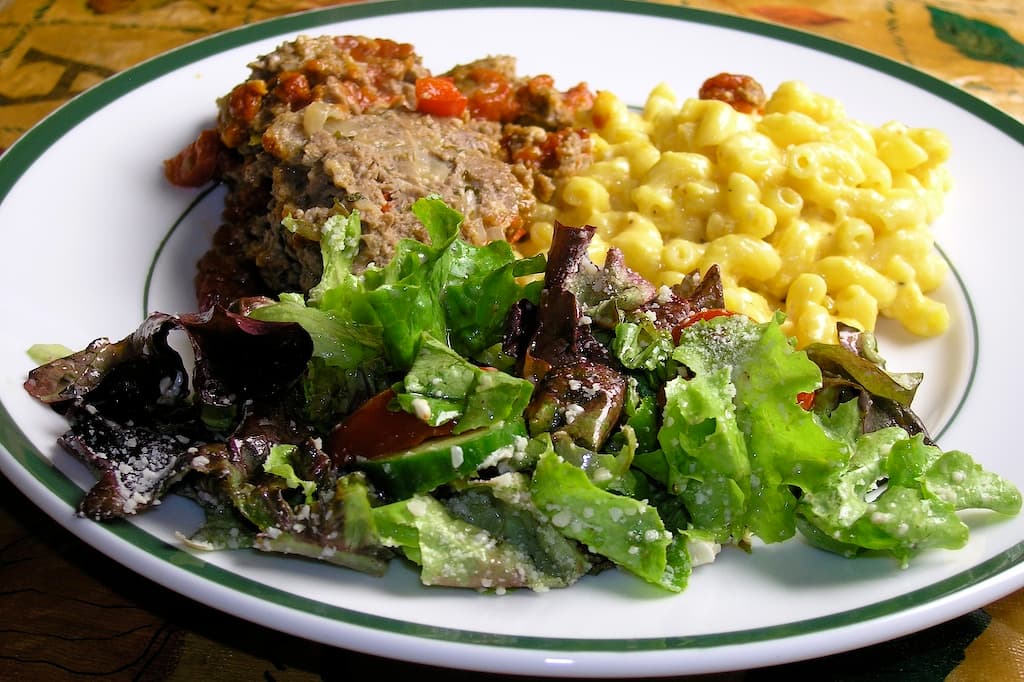
1990s-present
Traditional meatloaf served as a diner lunch or dinner with classic sides such as mashed potatoes and vegetables. A fixture of 20th-century American roadside, state fair, and lunch counter dining experiences.
America's Melting Pot
Victory Garden Salad photo coming soon
1942-1945
A simple, economical salad made from homegrown vegetables typical of Victory Gardens. This side dish highlights the wartime focus on self-sufficiency and fresh produce during food rationing in the 1930s and 1940s.