
Recipe archive
Loading
Setting the table...
Fetching the latest recipes from the archive.
Loading
Fetching the latest recipes from the archive.
Recipe archive
America's Melting Pot
Rice Krispies Treats hero image coming soon
1930-1945 - Postwar American Home Cooks and Commercial Cereal Companies
Rice Krispies Treats are a simple no-bake dessert made with puffed rice cereal and melted marshmallows, often buttered for richness. Popularized in American homes during the postwar era, particularly in lunchboxes, church gatherings, and tailgate parties, this treat remains a nostalgic favorite.
No featured photo yet. Upload a photo with your review. The highest-rated community photo may become this recipe's hero image.
Difficulty
Easy
Prep time
10 minutes
Cook time
0 minutes
Total time
10 minutes plus cooling
Servings
12 squares
Region
Battle Creek, Michigan Kellogg home-economics test kitchens
Era introduced
1930-1945
Introduced by
Postwar American Home Cooks and Commercial Cereal Companies
Recipe tools
Log in to save this recipe to a collection.
Rice Krispies Treats came into prominence between 1946 and 1969 as part of the postwar American suburban lifestyle, with increased availability of convenience foods. Their ease of preparation and appealing sweet flavor made them a popular choice for children's lunches, church socials, and tailgate snacks. This no-bake cereal bar reflects the era's focus on quick, crowd-pleasing desserts that became embedded in American childhood memories and community events.
Share family changes, regional twists, or pantry-friendly adaptations as full community recipes.
Log in to submit a community recipe.
No community recipes yet. Submitted recipes are published right away.
Rate this recipe and share how it worked at your table.
Log in to review this recipe.
No reviews yet. Be the first to rate this recipe.
Recipes matched by era, region, occasion, ingredients, and cultural roots from the archive.
Same era
America's Melting Pot
Army Chili photo coming soon
1930-1945
A practical ground-beef chili with beans, tomatoes, onion, chili powder, cumin, and paprika, adapted from Armed Forces chili con carne formulas for a family pot.
America's Melting Pot
Chicken Noodle Soup photo coming soon
1934-present
Chicken Noodle Soup is a comforting one-pot dish made by simmering chicken, vegetables, broth, and egg noodles into a nourishing soup. A staple across American kitchens for generations, it highlights simplicity, warmth, and adaptability in soups and stews throughout the country's culinary evolution.
America's Melting Pot
Chocolate Cake for a Crowd photo coming soon
1930s-1945
Chocolate Cake for a Crowd is a dessert designed to serve many people economically during the Depression and World War II eras (1930-1945). This cake reflects military and mess hall kitchens' need for practical, filling, and easily produced sweets using limited ingredients. Its simple yet rich chocolate flavor made it a favorite for community events, schools, and military gatherings where feeding large numbers was essential.
Same region
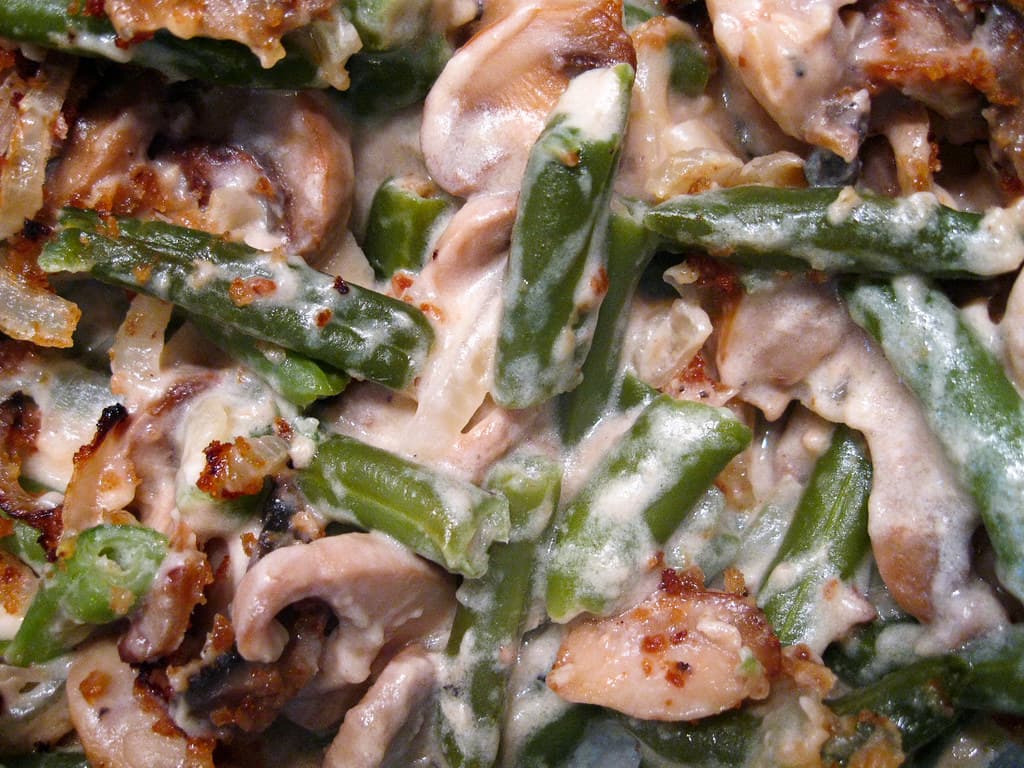
1900-1929
Green Bean Casserole is a staple side dish in Midwestern American holiday tables, church suppers, and school gatherings. Combining green beans, cream of mushroom soup, and crispy fried onions, it became widely popular in the early 20th century and remains a comforting, familiar casserole.
America's Melting Pot
Hamburger Hotdish photo coming soon
1946-1969
Hamburger hotdish is a layered casserole popular in the Midwest, combining ground beef, noodles or potatoes, and a creamy sauce baked until bubbly. Developing during the postwar suburban era, this casserole highlights convenience and freezer-friendly family meals.
America's Melting Pot
Horseshoe Sandwich photo coming soon
1946-1969
The Horseshoe Sandwich is a Midwestern American comfort food featuring thick-sliced bread topped with meat, French fries, and rich cheese sauce. Originating in Illinois during the postwar era, it became a regional favorite combining diner food, casseroles, and backyard cooking influences. This substantial dish serves as a casual meal synonymous with tailgates and family gatherings.
Same table
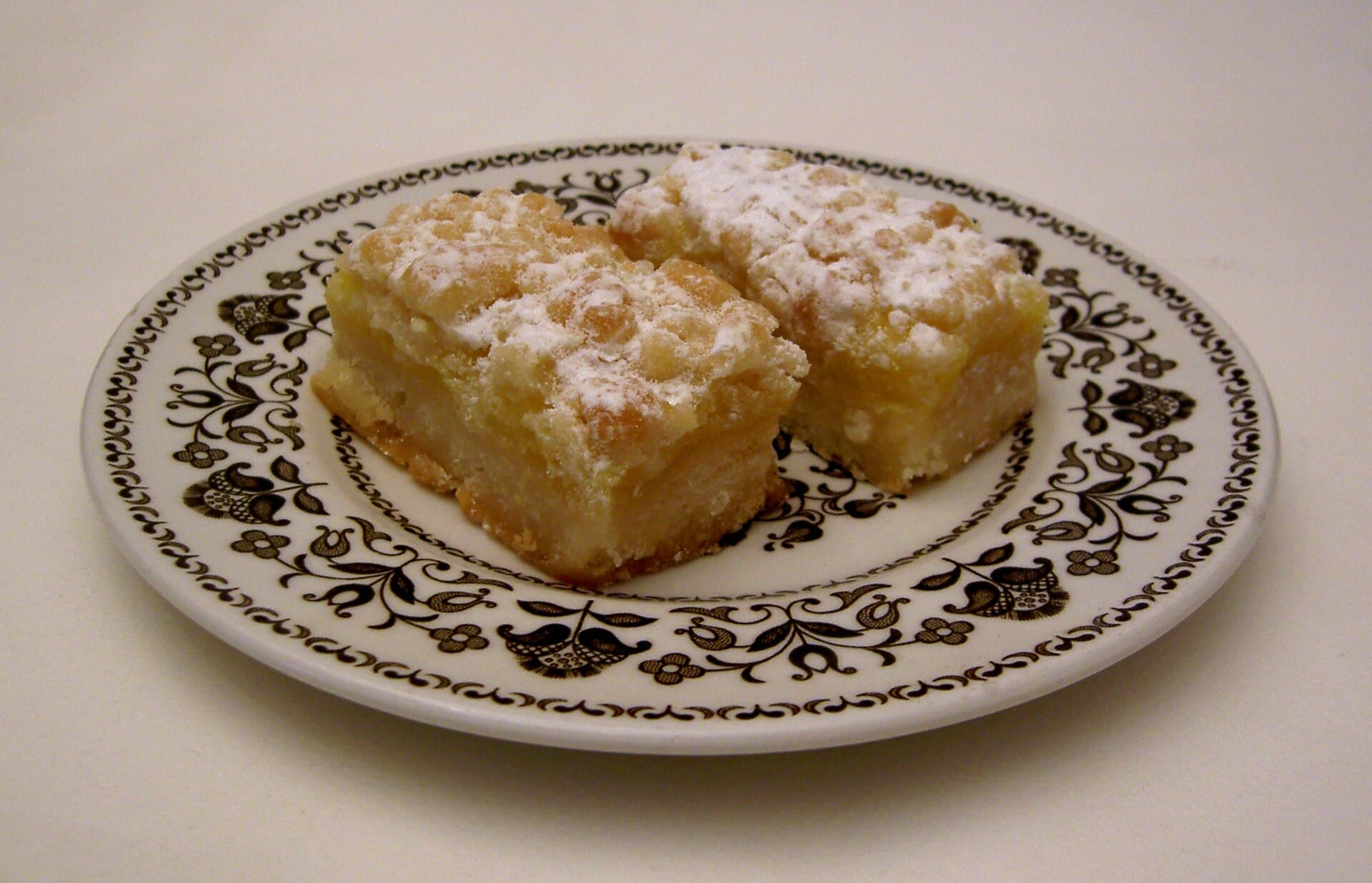
1963-present
Lemon bars are a popular American dessert featuring a shortbread crust topped with a bright, tangy lemon custard. Widely enjoyed at tailgates, booster clubs, and church gatherings from the 1970s to 1980s, lemon bars combine convenience with fresh citrus flavor.
America's Melting Pot
Hotdish photo coming soon
1900-1929
Hotdish is a type of casserole popular in the American Midwest, especially associated with community gatherings, church suppers, and state fairs during the early 20th century. Combining a starch, protein (often ground meat or tuna), canned soup, and vegetables, it exemplifies economical, filling cuisine typical of immigrant and rural communities from 1900 to 1929.
America's Melting Pot
Pickle Roll-Ups photo coming soon
1950s-present
Pickle Roll-Ups are a popular American snack combining a crunchy pickle spear wrapped inside a slice of deli meat and cream cheese spread. Common at tailgates, church potlucks, and booster clubs during the late 20th century, these easy-to-make finger foods deliver tangy, creamy, and savory flavors in a convenient roll.