
Recipe archive
Loading
Setting the table...
Fetching the latest recipes from the archive.
Loading
Fetching the latest recipes from the archive.
Recipe archive
America's Melting Pot
City Chicken hero image coming soon
1930-1945 - Polish-American, Czech-American, Slovak-American, and Eastern European immigrant communities in industrial U.S. cities
City Chicken consists of cubes of pork or veal (sometimes a mix), skewered on sticks, breaded, and fried or baked to simulate roasted chicken. It became popular in American industrial cities with large Polish, Czech, Slovak, and other Eastern European immigrant populations in the early 20th century, especially where chicken was expensive or scarce. Served often at diners, lunch counters, and state fairs, it represents resourceful ethnic adaptation and immigrant influence on urban American foodways.
No featured photo yet. Upload a photo with your review. The highest-rated community photo may become this recipe's hero image.
Difficulty
Medium
Prep time
20 minutes
Cook time
30 minutes
Total time
50 minutes
Servings
4
Region
Pittsburgh, Pennsylvania and Cleveland, Ohio
Era introduced
1930-1945
Introduced by
Polish-American, Czech-American, Slovak-American, and Eastern European immigrant communities in industrial U.S. cities
Recipe tools
Log in to save this recipe to a collection.
City Chicken originated in early 20th-century American industrial cities where poultry was expensive and scarce, prompting immigrant communities - particularly Polish, Czech, Slovak, and other Eastern Europeans - to create an affordable alternative using cubes of pork or veal. Skewered and breaded to resemble drumsticks, these fried or baked sticks emulated chicken both in appearance and experience. Popular at diners, lunch counters, and state fairs, the dish reflects immigrant ingenuity and cultural traditions adapted to urban American markets, often prepared especially around Easter celebrations.
Share family changes, regional twists, or pantry-friendly adaptations as full community recipes.
Log in to submit a community recipe.
No community recipes yet. Submitted recipes are published right away.
Rate this recipe and share how it worked at your table.
Log in to review this recipe.
No reviews yet. Be the first to rate this recipe.
Recipes matched by era, region, occasion, ingredients, and cultural roots from the archive.
Same era
America's Melting Pot
Army Chili photo coming soon
1930-1945
A practical ground-beef chili with beans, tomatoes, onion, chili powder, cumin, and paprika, adapted from Armed Forces chili con carne formulas for a family pot.
America's Melting Pot
Chicken Noodle Soup photo coming soon
1934-present
Chicken Noodle Soup is a comforting one-pot dish made by simmering chicken, vegetables, broth, and egg noodles into a nourishing soup. A staple across American kitchens for generations, it highlights simplicity, warmth, and adaptability in soups and stews throughout the country's culinary evolution.
America's Melting Pot
Chocolate Cake for a Crowd photo coming soon
1930s-1945
Chocolate Cake for a Crowd is a dessert designed to serve many people economically during the Depression and World War II eras (1930-1945). This cake reflects military and mess hall kitchens' need for practical, filling, and easily produced sweets using limited ingredients. Its simple yet rich chocolate flavor made it a favorite for community events, schools, and military gatherings where feeding large numbers was essential.
Same region
America's Melting Pot
Cucumber Salad photo coming soon
1880s-present
This cool cucumber salad is a staple among Polish, Czech, Slovak, and other Eastern European-American communities in early 20th-century immigrant cities. Served often in diners and at state fairs, it features thinly sliced cucumbers dressed with sour cream, fresh dill, onions, and vinegar for a tangy, refreshing side.
America's Melting Pot
Haluski photo coming soon
1880s-present
Haluski is a traditional dish of Polish, Czech, Slovak, and Eastern European origins consisting of noodles, fried cabbage, and onions. Brought to the United States by immigrants in the early 20th century, it became comfort food commonly served at diners and state fairs, especially around Easter.
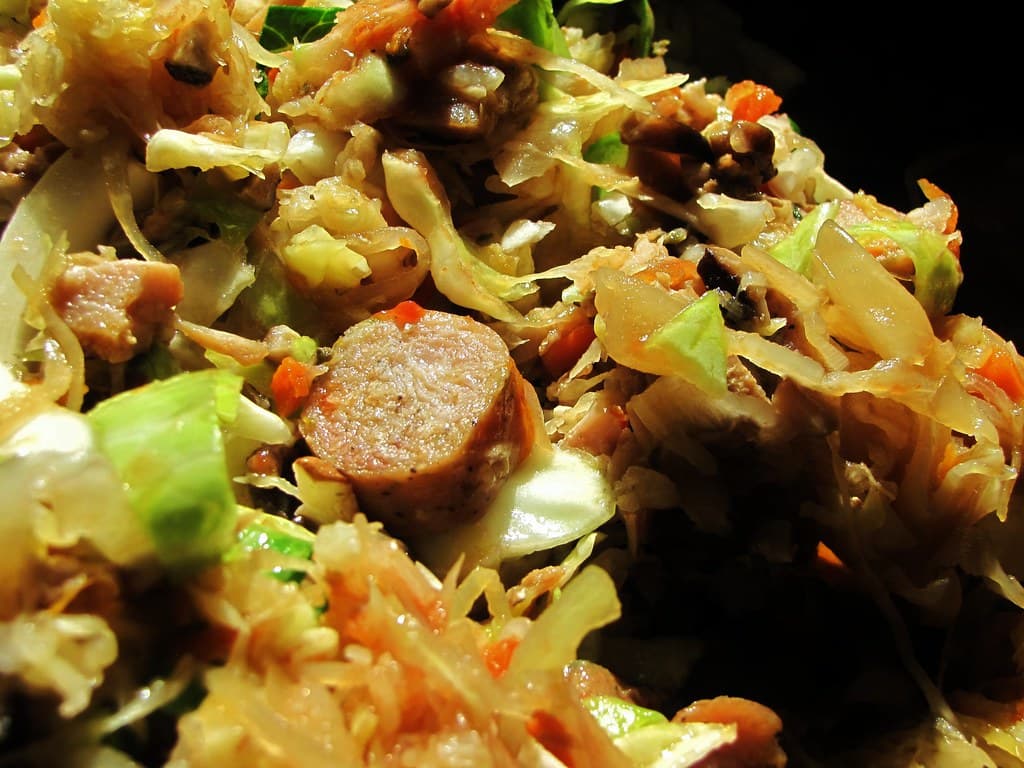
1880s-present
Kielbasa and sauerkraut is a traditional Eastern European dish combining smoked sausage with tangy fermented cabbage. Immigrant communities brought this hearty comfort food to American diners, state fairs, and holiday tables during the early 20th century, representing cultural preservation in new urban environments.
Same table
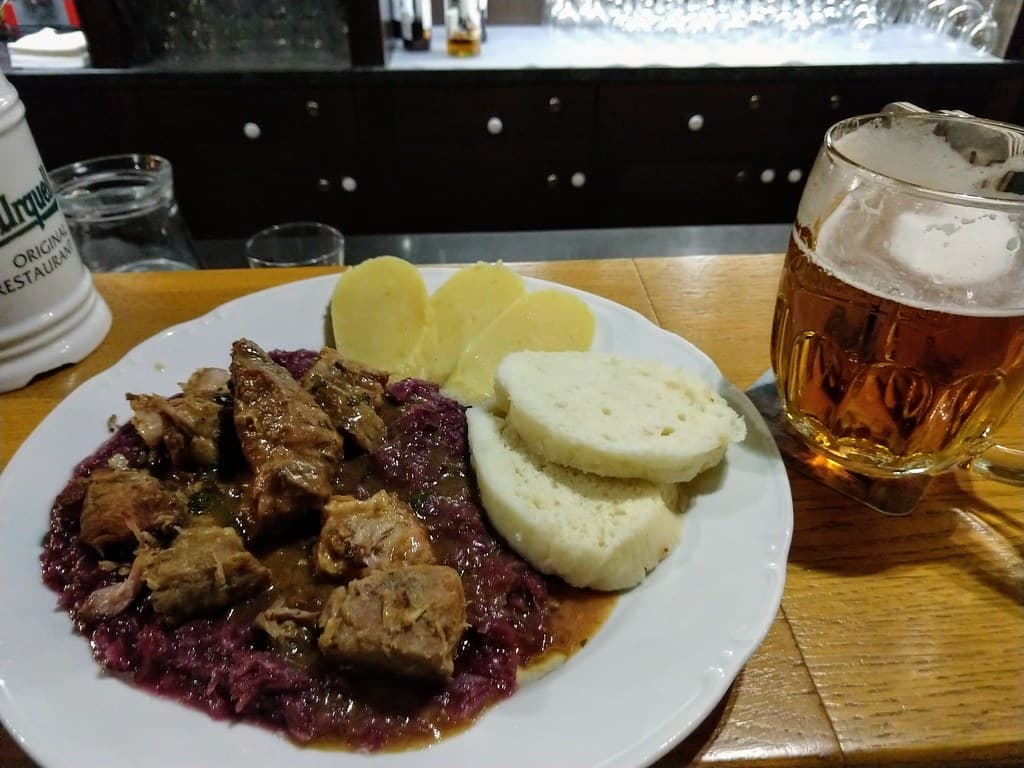
1850s-present
This hearty dish combines slow-roasted pork, delicate bread dumplings, and tangy sauerkraut, reflecting the culinary traditions of Czech and Slovak immigrants in early 20th-century America. It remains a beloved entree at diners and state fairs during festive occasions like Easter.
1880s-present
Kielbasa and sauerkraut is a traditional Eastern European dish combining smoked sausage with tangy fermented cabbage. Immigrant communities brought this hearty comfort food to American diners, state fairs, and holiday tables during the early 20th century, representing cultural preservation in new urban environments.
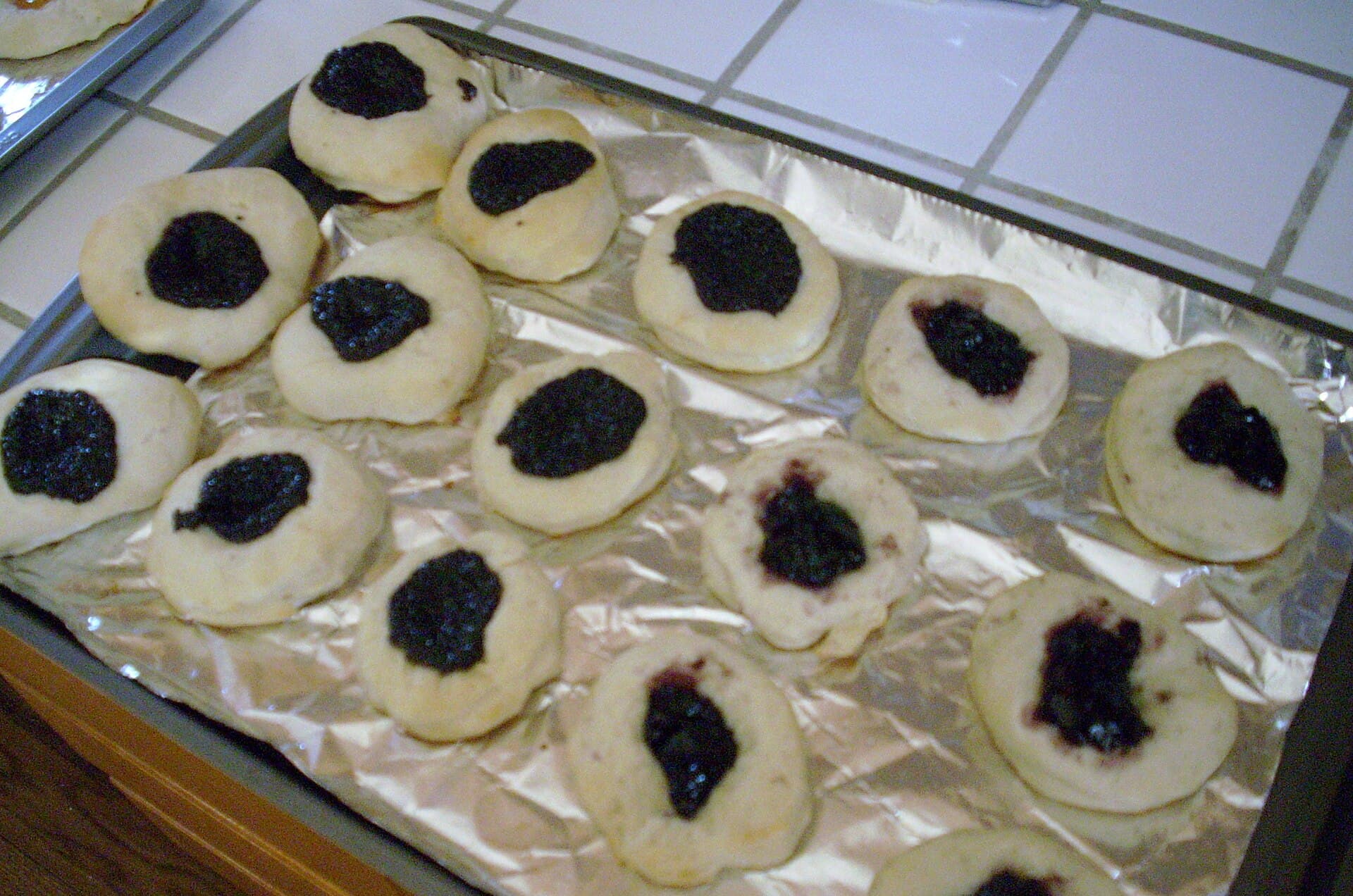
1900-1929
Kolaches are soft yeast dough pastries filled with fruit jams, cream cheese, or savory meats. They became popular in the Great Plains through Polish, Czech, Slovak, and other Eastern European immigrant communities. These treats are traditionally enjoyed at church gatherings, state fairs, and holiday celebrations like Easter, symbolizing community and heritage.