
Recipe archive
Loading
Setting the table...
Fetching the latest recipes from the archive.
Loading
Fetching the latest recipes from the archive.
Recipe archive
America's Melting Pot
SOS hero image coming soon
1900-1929 - Depression-era American home cooks
This main dish version of SOS consists of creamed dried chipped beef served over toast, a staple during the Great Depression. The recipe embodies economical cooking by stretching preserved ingredients into a filling comfort meal.
No featured photo yet. Upload a photo with your review. The highest-rated community photo may become this recipe's hero image.
Difficulty
Easy
Prep time
5 minutes
Cook time
10 minutes
Total time
15 minutes
Servings
4
Region
Washington, D.C. War Department and U.S. Army post kitchens
Era introduced
1900-1929
Introduced by
Depression-era American home cooks
Recipe tools
Log in to save this recipe to a collection.
During the economic struggles of the 1930s, families relied on pantry staples like dried beef to create affordable, satisfying meals. This creamed chipped beef on toast dish provided essential richness and protein with minimal ingredients and effort. Its status as a Depression-era main course demonstrates the era's resourceful and comforting food traditions.
Share family changes, regional twists, or pantry-friendly adaptations as full community recipes.
Log in to submit a community recipe.
No community recipes yet. Submitted recipes are published right away.
Rate this recipe and share how it worked at your table.
Log in to review this recipe.
No reviews yet. Be the first to rate this recipe.
Recipes matched by era, region, occasion, ingredients, and cultural roots from the archive.
Same era
America's Melting Pot
American French Dressing photo coming soon
1900s-present
American French Dressing is a dressing with real American table personality: The bright orange-red, sweet, tomatoey bottled dressing Americans call "French." Not very French, very American. It brings flavor from coast-to-coast American tables to cookouts, counters, lunch plates, potlucks, and weeknight suppers.
America's Melting Pot
Apple Pie Shake photo coming soon
1922-present
Apple Pie Shake brings drive-in, carhop, and fast-food dessert-counter energy to the table: Diner pie a la mode in a cup.
America's Melting Pot
Avgolemono Soup photo coming soon
1900-1929
A silky Greek-American chicken, rice, egg, and lemon soup made by tempering eggs into hot broth for a creamy dairy-free finish.
Same region
America's Melting Pot
Creamed Chipped Beef on Toast photo coming soon
1910s-present
A nostalgic American diner breakfast or lunch dish featuring creamed chopped beef served on toasted bread, combining simplicity with savory comfort.
America's Melting Pot
SOS Creamed Beef Sauce photo coming soon
1910s-present
SOS Creamed Beef Sauce is a condiment with real American table personality: Military and diner "cream chipped beef on toast.". It brings flavor from coast-to-coast American tables to cookouts, counters, lunch plates, potlucks, and weeknight suppers.
America's Melting Pot
Army Bean Soup photo coming soon
1861-1900
A hearty military-style bean soup built on navy beans, smoked ham hock, onion, celery, carrot, and bay leaf, adapted for a home pot from large-batch service traditions.
Same table
America's Melting Pot
SOS photo coming soon
1910-present
SOS is a staple dish consisting of creamed chipped dried beef served over toasted bread, common in military and working-class kitchens during the Great Depression and World War II. Known for its economical use of preserved ingredients, it's a quick, savory comfort food.
America's Melting Pot
Butter Chicken photo coming soon
1975-2026
Butter chicken, or murgh makhani, is associated with Moti Mahal and Punjabi cooks who turned tandoori chicken into a rich tomato-butter gravy. In the United States, Indian restaurants, immigrant cooks, supermarket sauces, and suburban takeout made it one of the best-known Indian dishes for American diners.
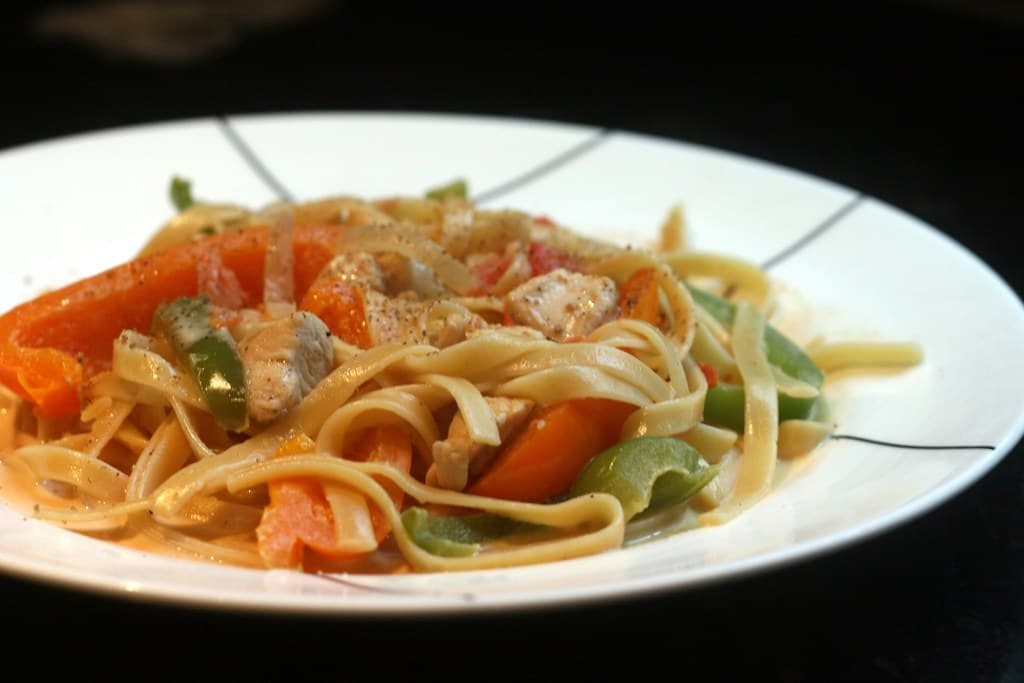
1990-2026
Cajun chicken pasta is American fusion in family-restaurant form. It borrows the spice profile and blackening language popularized by Cajun restaurant cooking, then folds it into creamy pasta for a 1990s-style chain and mall-restaurant favorite.