
Recipe archive
Loading
Setting the table...
Fetching the latest recipes from the archive.
Loading
Fetching the latest recipes from the archive.
Recipe archive
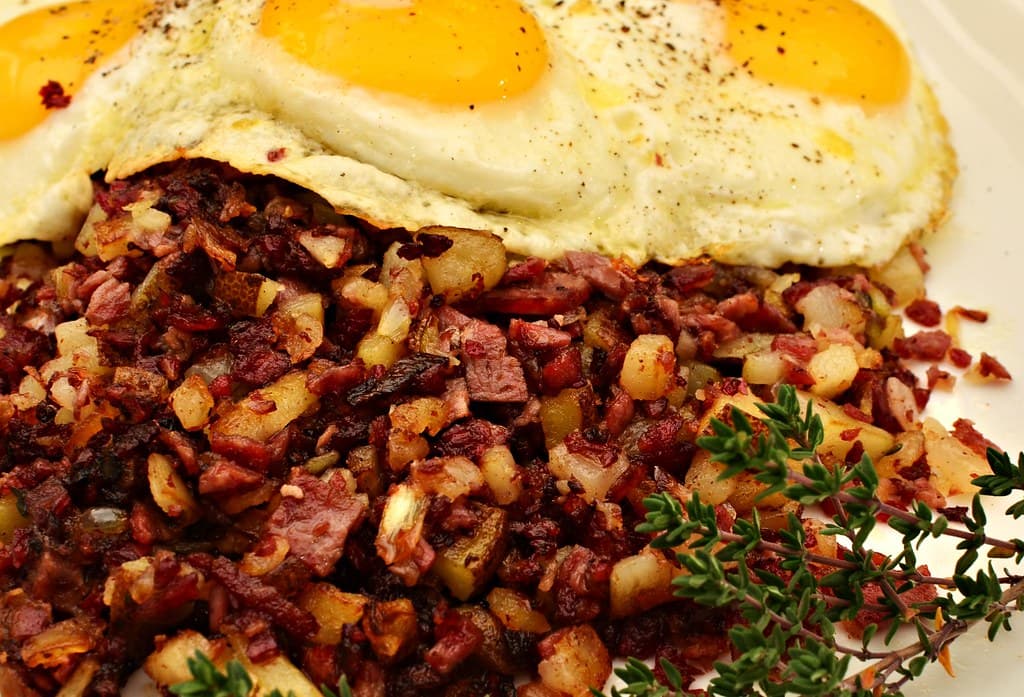
1900-1929 - American home cooks during the World War II era
Corned beef hash is a simple blend of chopped corned beef, potatoes, and onions, pan-fried to a crispy breakfast dish popular on the World War II home front.
Community-powered photos. Reviewers can upload dish photos, and the highest-rated community image may be featured here.
Difficulty
Easy
Prep time
10 minutes
Cook time
15 minutes
Total time
25 minutes
Servings
4
Region
New England and New York Irish American leftover kitchens
Era introduced
1900-1929
Introduced by
American home cooks during the World War II era
Recipe tools
Log in to save this recipe to a collection.
During the hardships of the 1930s and World War II, corned beef hash emerged as a resourceful and satisfying meal for many American households. Utilizing canned or leftover corned beef mixed with potatoes and onions, this dish turned scarce ingredients into a filling and economical breakfast or supper. Its popularity reflects wartime frugality and the ingenuity of home cooks to maximize limited food supplies.
Share family changes, regional twists, or pantry-friendly adaptations as full community recipes.
Log in to submit a community recipe.
No community recipes yet. Submitted recipes are published right away.
Rate this recipe and share how it worked at your table.
Log in to review this recipe.
No reviews yet. Be the first to rate this recipe.
Recipes matched by era, region, occasion, ingredients, and cultural roots from the archive.
Same era
America's Melting Pot
American French Dressing photo coming soon
1900s-present
American French Dressing is a dressing with real American table personality: The bright orange-red, sweet, tomatoey bottled dressing Americans call "French." Not very French, very American. It brings flavor from coast-to-coast American tables to cookouts, counters, lunch plates, potlucks, and weeknight suppers.
America's Melting Pot
Apple Pie Shake photo coming soon
1922-present
Apple Pie Shake brings drive-in, carhop, and fast-food dessert-counter energy to the table: Diner pie a la mode in a cup.
America's Melting Pot
Avgolemono Soup photo coming soon
1900-1929
A silky Greek-American chicken, rice, egg, and lemon soup made by tempering eggs into hot broth for a creamy dairy-free finish.
Same region
America's Melting Pot
Hash Browns photo coming soon
1880s-present
Hash browns are shredded or diced potatoes pan-fried until golden and crisp, popularized in American diners and lunch counters during the early 20th century. Served primarily at breakfast, they embody simple, rustic comfort food.

1800s-present
Homemade ice cream is a beloved treat enjoyed across the United States, especially during warm weather and holidays like the Fourth of July. This recipe captures the timeless tradition of making rich, creamy ice cream at home using simple ingredients. While commercial ice cream became widely available in the 20th century, homemade versions date back to earlier periods and remain a festive family activity.

1700s-present
Lemonade is a simple, refreshing drink made from lemon juice, water, and sugar, popularized in American suburbs during the postwar boom. Served at backyard barbecues and holiday gatherings, especially on the Fourth of July, it embodies summer refreshment and casual entertaining.
Same table

1700s-present
Corn chowder is a creamy and filling soup showcasing fresh or canned corn with potatoes, onions, and occasionally bacon or salt pork, enjoyed across the United States over multiple eras.
America's Melting Pot
Boiled Potatoes with Butter photo coming soon
1800-2026
Buttered boiled potatoes turn the plain potato pot into a finished side dish. The method is common across European and American tables: boil small potatoes until tender, drain well, and coat them with butter and herbs while they are still steaming.
America's Melting Pot
Corn Soup photo coming soon
pre-1776-present
Corn soup is a nourishing dish rooted in Indigenous American foodways, made with fresh or dried corn and vegetables. It was a common staple during the early 19th century, reflecting traditional methods of using native crops for sustenance.