
Recipe archive
Loading
Setting the table...
Fetching the latest recipes from the archive.
Loading
Fetching the latest recipes from the archive.
Recipe archive
America's Melting Pot
Root Beer hero image coming soon
1861-1900 - Colonial American home brewers and herbal tradition practitioners
Root beer is a traditional American soft drink originally made by fermenting roots, bark, herbs, and spices. This recipe recreates an early version from the late 18th century, emphasizing natural flavors and a slight effervescence common to homemade brews before commercial mass production.
No featured photo yet. Upload a photo with your review. The highest-rated community photo may become this recipe's hero image.
Difficulty
Medium
Prep time
15 minutes plus fermentation time
Cook time
30 minutes
Total time
2 days
Servings
6 cups
Region
Philadelphia Hires root-beer pharmacy and soda-fountain trade
Era introduced
1861-1900
Introduced by
Colonial American home brewers and herbal tradition practitioners
Recipe tools
Log in to save this recipe to a collection.
Root beer originated in the late 18th century as a homemade fermented beverage made from roots, herbs, and spices native to North America. Colonists and Indigenous peoples influenced its development. Early versions contained sassafras and sarsaparilla roots, and the drink was often brewed at home to create a refreshing, mildly fermented soda-like beverage. This tradition laid the groundwork for commercial root beer production centuries later.
Share family changes, regional twists, or pantry-friendly adaptations as full community recipes.
Log in to submit a community recipe.
No community recipes yet. Submitted recipes are published right away.
Rate this recipe and share how it worked at your table.
Log in to review this recipe.
No reviews yet. Be the first to rate this recipe.
Recipes matched by era, region, occasion, ingredients, and cultural roots from the archive.
Same era
America's Melting Pot
Army Bean Soup photo coming soon
1861-1900
A hearty military-style bean soup built on navy beans, smoked ham hock, onion, celery, carrot, and bay leaf, adapted for a home pot from large-batch service traditions.

1861-1900
A basic homemade bagel recipe using high-protein flour, malt or brown sugar, a short boil, and a hot bake for chewy New York-style results.
America's Melting Pot
Bagels with Schmear photo coming soon
1861-1900
A deli-style bagel with a thick schmear of plain or scallion cream cheese, with optional onion, capers, tomato, and cucumber.
Same region
America's Melting Pot
Shoofly Pie Ancestor photo coming soon
1776-1800
The Shoofly Pie Ancestor is an early version of the molasses crumb pie originating in the Mid-Atlantic region during the late 18th century. It features simple ingredients reflective of colonial foodways before industrialized sugar was widespread.
America's Melting Pot
Acorn Bread photo coming soon
1800-1860
A nutty, lightly sweet quick bread made with properly leached acorn flour, cornmeal, and wheat flour.
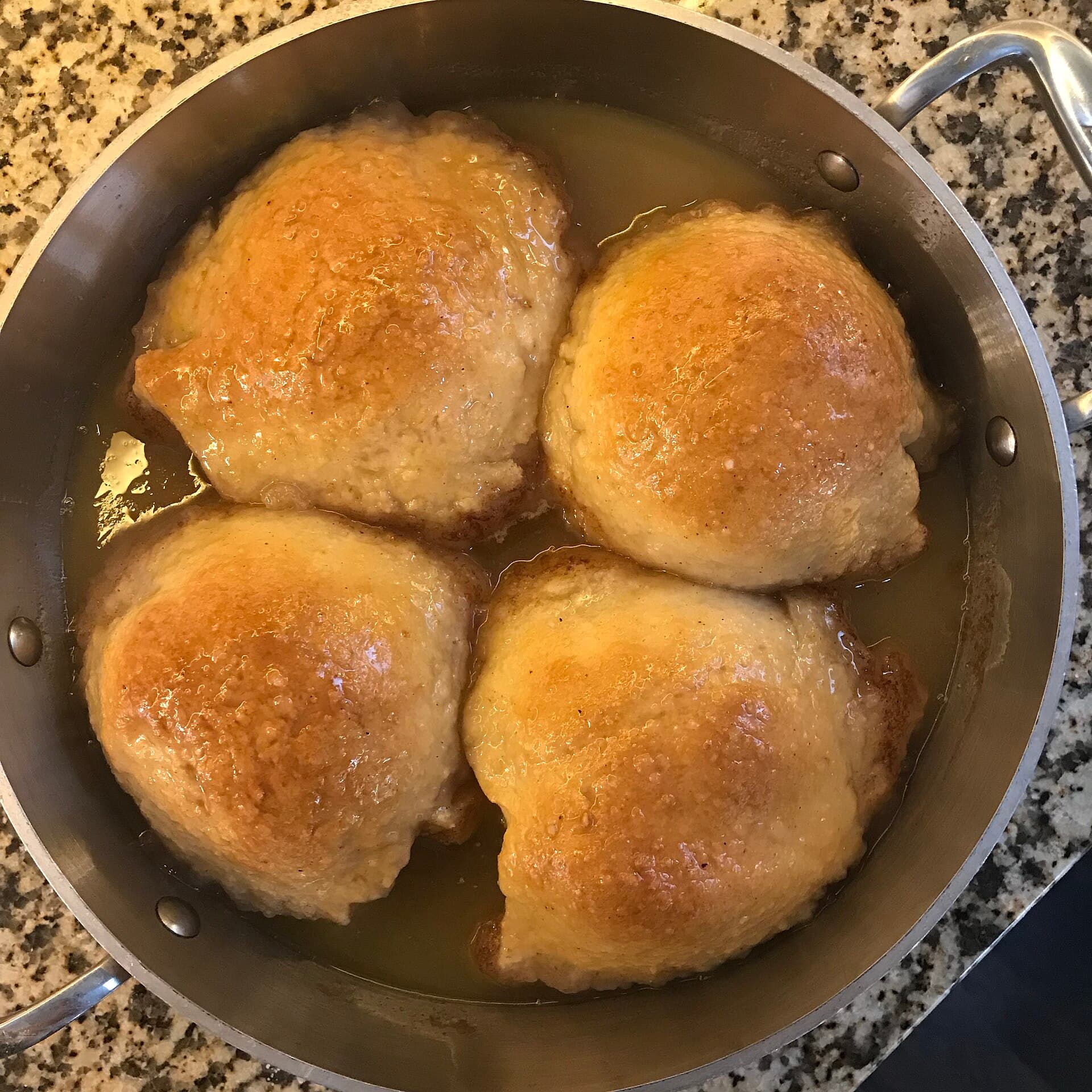
1800s-present
A Pennsylvania Dutch-style dessert of cored apples wrapped in dough and baked with brown sugar syrup.
Same table
America's Melting Pot
Rabbit Pie photo coming soon
1700s-present
Rabbit Pie is a hearty savory pie featuring tender rabbit meat, vegetables, and herbs baked into a rich, flaky crust. Popular in early American cuisine, especially in the late 18th century, it was a practical way to use lean game meats in home kitchens.
America's Melting Pot
Rabbit Stew photo coming soon
1700s-present
Rabbit Stew is a slow-cooked, savory dish combining rabbit meat with root vegetables and herbs in a flavorful broth. A rural favorite in early America, it provided nutrient-rich, warming food using wild or farmed rabbits during the late 18th century.
America's Melting Pot
Venison Roast photo coming soon
1700s-present
A simple yet flavorful roast venison main dish reflecting early American culinary practices. Venison was a valued game meat during the Revolutionary era, often roasted with herbs and root vegetables.