
Recipe archive
Loading
Setting the table...
Fetching the latest recipes from the archive.
Loading
Fetching the latest recipes from the archive.
Recipe archive
America's Melting Pot
Pigeon Pie hero image coming soon
1776-1800 - Colonial American cooks of the Revolutionary era
Pigeon Pie is a traditional colonial American meat pie using squab or young pigeon, popular during the Revolutionary era. This hearty pie blends game bird with vegetables and seasoning in a flaky pastry crust, reflecting early American reliance on local game and resourceful cooking practices of the period.
No featured photo yet. Upload a photo with your review. The highest-rated community photo may become this recipe's hero image.
Difficulty
Hard
Prep time
1 hour 30 minutes
Cook time
1 hour 15 minutes
Total time
2 hours 45 minutes
Servings
6
Region
New England and Mid-Atlantic early American meat-pie kitchens
Era introduced
1776-1800
Introduced by
Colonial American cooks of the Revolutionary era
Recipe tools
Log in to save this recipe to a collection.
Pigeon, or squab, was a common source of meat in colonial America, valued for its tender, flavorful flesh. Pigeon pie was a practical way to cook and preserve this game bird, combining it with root vegetables and herbs inside a pastry crust. Recipes documented from the late 18th century illustrate the importance of game pies in Revolutionary era kitchens, showcasing ingenuity in using available proteins to create sustaining, flavorful meals in early America.
Share family changes, regional twists, or pantry-friendly adaptations as full community recipes.
Log in to submit a community recipe.
No community recipes yet. Submitted recipes are published right away.
Rate this recipe and share how it worked at your table.
Log in to review this recipe.
No reviews yet. Be the first to rate this recipe.
Recipes matched by era, region, occasion, ingredients, and cultural roots from the archive.
Same era
America's Melting Pot
Ash Cakes photo coming soon
1776-1800
A plain cornmeal-and-water ash cake inspired by Revolutionary-era field cooking, adapted for a skillet or campfire with salt and a little fat for modern eatability.
America's Melting Pot
Bean Porridge photo coming soon
1776-1800
Bean porridge sits close to the everyday cooking of early America: beans or peas, water, a little meat when available, and meal to thicken the pot. It was plain food, but practical food, made in a kettle and stretched for households that needed warmth, calories, and thrift more than ceremony.
1700s-1800s
Chicken Pie is a hearty savory pie made with cooked chicken, vegetables, and a flaky pastry crust. Rooted in mid to late 19th-century railroad and boardinghouse cooking, it offered a portable, filling meal for workers and travelers during the Civil War and Reconstruction period, blending practicality with comforting flavors.
Same region
1700s-1800s
Chicken Pie is a hearty savory pie made with cooked chicken, vegetables, and a flaky pastry crust. Rooted in mid to late 19th-century railroad and boardinghouse cooking, it offered a portable, filling meal for workers and travelers during the Civil War and Reconstruction period, blending practicality with comforting flavors.
1800-1860
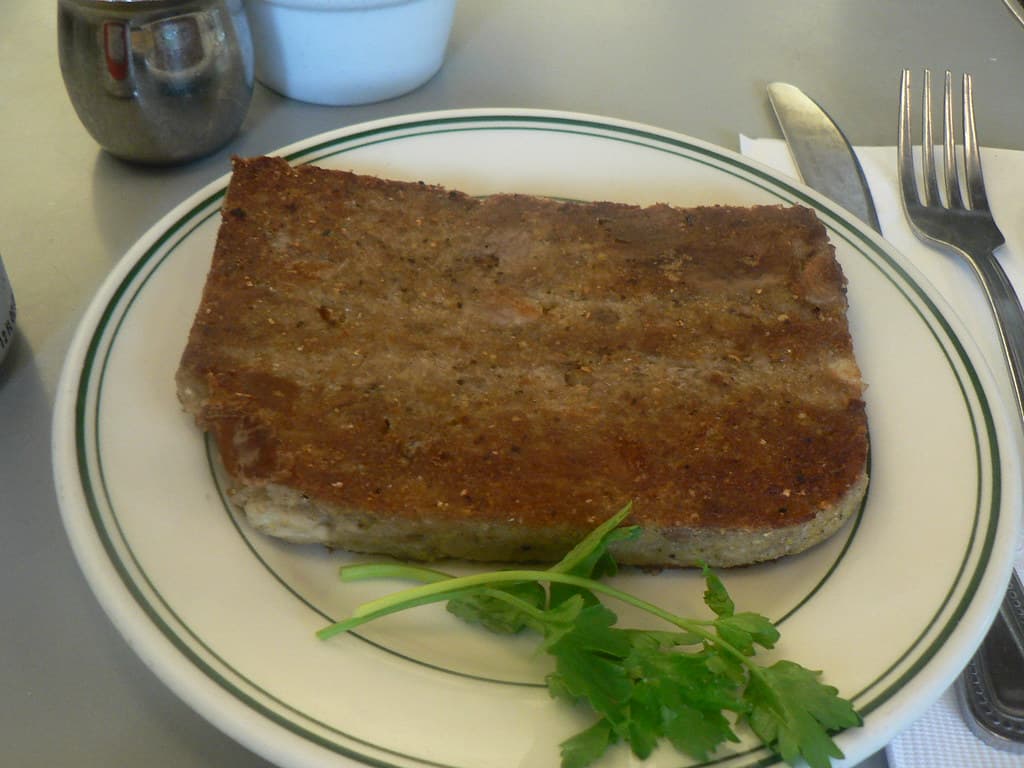
Scrapple is a pork-based mush combined with cornmeal and spices, formed into a loaf, cooled, sliced, and fried. Introduced in America during the early 19th century, it became a breakfast staple mainly in Pennsylvania, Delaware, Maryland, and parts of New England, rooted in resourceful colonial cuisine.
America's Melting Pot
Acorn Bread photo coming soon
1800-1860
A nutty, lightly sweet quick bread made with properly leached acorn flour, cornmeal, and wheat flour.
Same table
America's Melting Pot
Pimento Cheese Ancestor photo coming soon
1800-1860
This Pimento Cheese Ancestor recipe reflects an early Southern American cheese spread from the first half of the 19th century, predating the widespread use of mayonnaise. The recipe combines cheese, pimiento peppers, and simple seasonings into a spread reflecting evolving Southern tastes and ingredient availability during the Young Republic era.
America's Melting Pot
Pizza, Early American Style photo coming soon
1905-present
Pizza, Early American Style reflects the introduction and adaptation of Italian pizza recipes by Italian-American immigrants during and after the Civil War through the late 19th century. Characterized by simple dough, tomato sauce, and modest toppings, this style marks the beginnings of American pizza culture in immigrant communities.
America's Melting Pot
Chop Suey photo coming soon
1870s-1890s
Chop Suey is a stir-fried dish made with meat, vegetables, and a savory sauce, developed by Chinese-American cooks. It became a popular dish in American Chinese restaurants and diners during the early 1900s, adapting Chinese techniques and ingredients to American tastes and locally available produce.