
2020-2021
COVID-19 and the Reinvention of Food Access
When COVID-19 closed restaurants, schools, and workplaces, Americans saw empty shelves and long food-bank lines, even as federal agencies stressed that the national food supply itself remained strong.
The COVID-19 pandemic reminded Americans that food access depends on more than farms. It depends on workers, trucks, schools, restaurants, warehouses, packaging, inspection, technology, public policy, and trust. In 2020, restaurants closed or shifted to takeout, schools shut their doors, grocery shelves ran short, and families watched supply chains strain in real time.
Federal agencies emphasized that the country was not running out of food in an absolute sense, but the system had been built for patterns that suddenly changed. Food meant for restaurants could not instantly become grocery supply. School meals had to become pickup meals. Food banks faced extraordinary demand. Some households ordered groceries online for the first time, while others relied on neighbors, mutual aid, churches, schools, and emergency programs.
The Farmers to Families Food Box Program, school meal waivers, SNAP changes, food-bank distribution, grocery worker labor, restaurant pivots, home gardening, bulk buying, and home cooking all became part of the story. Americans baked bread, cooked pantry meals, learned curbside pickup, stretched budgets, and worried about elders and vulnerable neighbors.
The first shock was visual. Empty flour shelves, missing yeast, bare meat cases, purchase limits, masked grocery workers, taped floors, and long lines made the food system visible to people who had rarely thought about it. The shelves did not tell the whole story, but they told enough to make households uneasy.
Restaurant closures revealed how much American food spending had moved outside the home. Food packed for restaurants did not easily fit grocery channels. Farmers dumped milk or lost buyers while food banks needed more supply. The problem was not simply quantity. It was format, labor, packaging, transportation, and timing.
Schools became food lifelines. Cafeteria workers packed meals for pickup, buses delivered food, and emergency waivers helped children eat when classrooms closed. In many communities, school nutrition staff became some of the most important public servants of the pandemic.
Home cooking changed too. Some people discovered sourdough, banana bread, bulk rice, beans, freezers, and pantry planning. Others had no time, no money, no safe workspace, or no reliable transportation. The pandemic reminded the country that cooking advice means little without access.
The proud part of the story is not that America avoided hardship. It did not. The proud part is that people adapted quickly: farmers, truckers, processors, grocery clerks, delivery drivers, school cooks, restaurant owners, food-bank volunteers, church groups, neighbors, and families all rebuilt pieces of the food system while living inside the emergency.
The first pandemic food shock was visual. Empty flour shelves, missing yeast, bare meat cases, purchase limits, masked grocery workers, taped floors, and long checkout lines made the food system visible. Shelves did not mean the country had run out of food. They showed that demand, packaging, labor, transport, and habit had changed faster than the system could rebalance.
Restaurants revealed the split between food supply and food access. Food packed for restaurants did not instantly fit grocery stores. A box of commercial lettuce, a bulk bag of flour, or a restaurant-size container of dairy could not simply appear on a home pantry shelf. Farmers lost buyers while food banks needed supply. The problem was not only quantity. It was format, timing, labor, refrigeration, contracts, and distribution.
Schools became emergency food infrastructure. Cafeteria workers packed meals for curbside pickup, buses carried food to neighborhoods, and federal waivers gave schools flexibility to feed children when classrooms were closed. In many communities, school nutrition staff became some of the most important public servants of the pandemic.
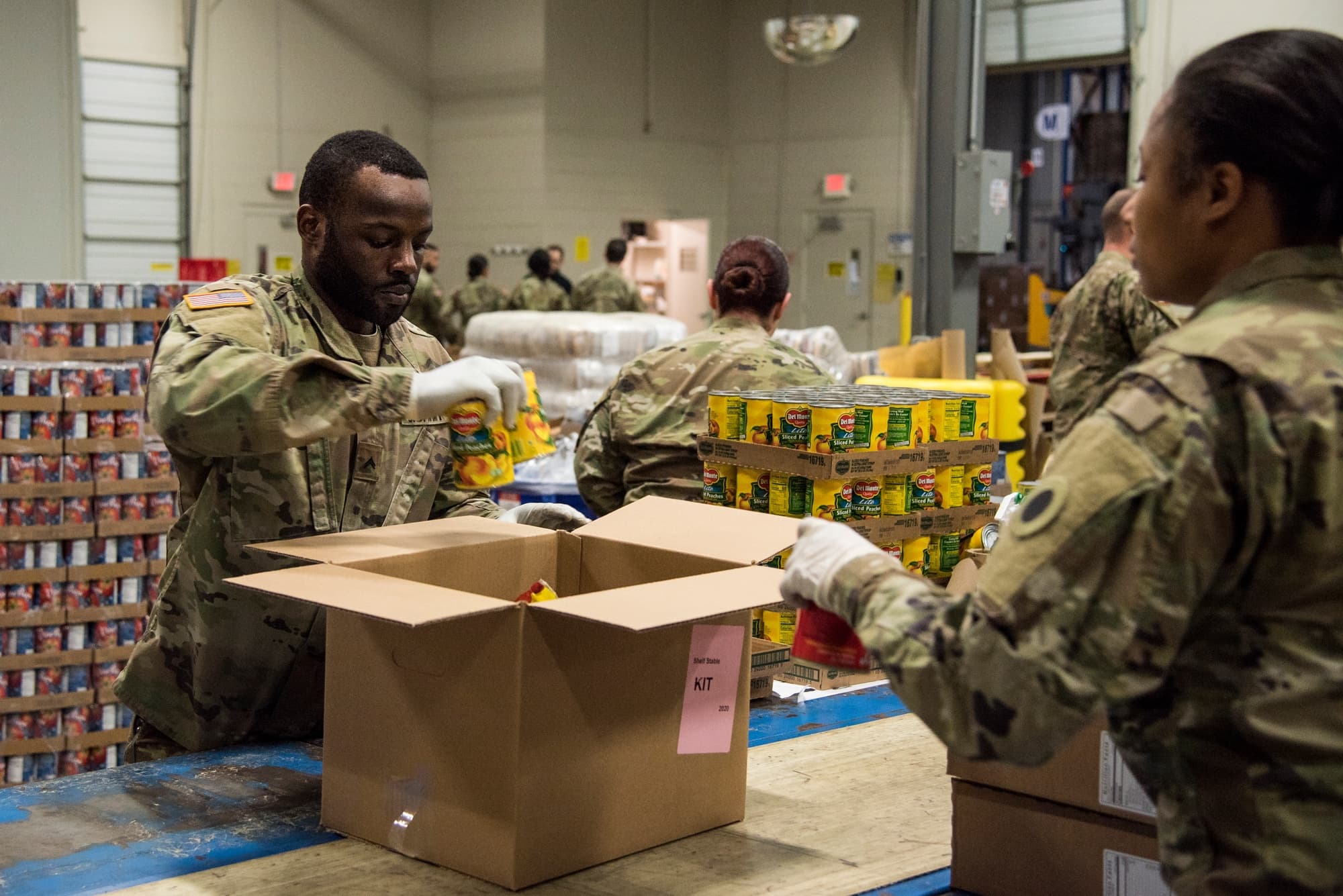
Food banks and emergency programs carried extraordinary pressure. The Farmers to Families Food Box Program moved fresh produce, dairy, meats, and seafood through contractors and community partners. It was imperfect, but it responded to market disruption and hunger at the same time. National Guard members, volunteers, churches, mutual-aid groups, and local nonprofits packed boxes, directed traffic, and brought food to people who had never expected to need help.
Home kitchens changed in unequal ways. Some households baked sourdough, banana bread, and pantry meals because they had time, space, and money. Others cooked under heavier burdens: lost wages, crowded housing, no childcare, unsafe work, illness, limited transit, or no reliable internet for grocery pickup. The pandemic made one truth clear: cooking advice means little without access.
The food system did not emerge unchanged. Online grocery ordering, curbside pickup, delivery apps, pantry planning, home gardening, mutual aid, school meal flexibility, restaurant takeout, and food-bank logistics all moved from emergency improvisation into lasting memory. COVID-19 food history is close, but it belongs in the national table because Americans saw the machinery of access and rebuilt parts of it under pressure.
Grocery workers became front-line food workers. Cashiers, stockers, warehouse crews, meat cutters, delivery drivers, and sanitation workers kept stores functioning while facing illness risk and public anxiety. Their work had often been treated as ordinary service. In 2020 it became visibly essential.
Meatpacking outbreaks exposed another hidden part of the food system. Plants depended on close labor, fast lines, cold rooms, and workers who often had limited power to refuse risk. When illness hit plants, supplies tightened and workers suffered. The meat case in the supermarket was connected to workplace safety in towns many shoppers never saw.
Restaurants improvised to survive. Dining rooms closed, but curbside pickup, takeout cocktails where legal, meal kits, family packs, outdoor dining, grocery boxes, and community meals appeared quickly. Some restaurants fed hospital workers or unemployed neighbors. Others closed forever. The pandemic changed the meaning of hospitality under emergency conditions.
Mutual aid became a food system in miniature. Neighbors bought groceries for elders, stocked community fridges, shared sourdough starters, delivered meals, exchanged pantry goods, and raised money for restaurant workers. These networks were informal, but they revealed local capacity that formal systems sometimes missed.
The pandemic also changed memory around the pantry. Flour, yeast, rice, beans, canned tomatoes, pasta, frozen vegetables, eggs, and shelf-stable milk felt newly important. For some families, the pantry became a buffer against uncertainty. For others, an empty pantry made clear how little margin the household had before the crisis began.
Digital access became food access. A household with a smartphone, credit card, delivery zone, and flexible schedule could solve problems that another household could not. Online ordering, pickup windows, app fees, substitutions, and delivery shortages created a new divide between people who could move food through screens and people who still had to stand in line.
The pandemic also revived older American habits under modern pressure. People planted gardens, saved jars, froze leftovers, shared starters, called relatives for recipes, and learned which meals could be built from shelf-stable staples. New technology mattered, but so did very old knowledge: beans, bread, rice, soup, neighbors, and the ability to stretch.
The pandemic food story is still close enough to feel raw. It exposed inequality and fragility, but it also revealed speed, generosity, and competence. Farmers, truckers, processors, grocers, school cooks, food banks, volunteers, and households rebuilt access under pressure. It belongs in American culinary history because it showed, once again, that feeding the country is a civic act.
From the archive
Listen and read deeper
USDA Agricultural Marketing Service
Farmers to Families Food Box Program
USDA reports that the emergency program distributed more than 173 million food boxes between May 2020 and May 2021.
DVIDS
Ohio National Guard Supporting Greater Cleveland Food Bank
Public-domain DVIDS photograph of Guard members packing and distributing food during the early COVID-19 response.
Recipes from this story
Cook from the chapter

1930-2026
Banana Bread
A classic banana bread made with mashed ripe bananas, butter, brown sugar, eggs, flour, baking soda, and optional walnuts.
America's Melting Pot
Sourdough Bread photo coming soon
1849-present
Sourdough Bread
Sourdough Bread is a crusty loaf leavened by naturally occurring wild yeasts from a fermented starter. It has been a staple throughout the West Coast from the Gold Rush through modern artisan baking, prized for its tangy flavor and chewy crumb.
Keep reading
Related stories
1930s
Depression Tables: Stretching Food Without Losing Dignity
During the Great Depression, hunger met a stubborn American habit: stretch, share, and keep going. Soup kitchens, church relief, school lunches, and federal food programs became part of the landscape.
World War II
Ration Books, Shared Sacrifice, and Supper
World War II rationing asked Americans to treat fairness as a kitchen duty. Sugar, coffee, meat, fats, gasoline, and other goods were managed so troops and civilians could both be supplied.
1950s-2000s
The Supermarket Age and the Television Kitchen
After 1950, supermarkets, frozen food, television kitchens, drive-ins, school lunches, backyard grills, diet culture, new appliances, and global migration changed daily eating.