1930s
Depression Tables: Stretching Food Without Losing Dignity
During the Great Depression, hunger met a stubborn American habit: stretch, share, and keep going. Soup kitchens, church relief, school lunches, and federal food programs became part of the landscape.
The Great Depression changed American eating because it changed the meaning of enough. Enough had once meant a pantry that could be trusted, wages that could meet the grocer, a garden that could be counted on, a cow or hens or a market basket within reach. After 1929, enough became a question asked every morning. Jobs vanished, wages fell, farms failed, banks closed, and families who had once been secure learned to measure flour, beans, potatoes, cabbage, oatmeal, cornmeal, coffee, and canned goods with new seriousness. A meal became a calculation: what is filling, what is cheap, what can be stretched, what can be saved for tomorrow, and what can be put in front of children without showing fear.
The hardship was uneven. A farm family with land, a milk cow, laying hens, a smokehouse, a garden, and canning jars might have food and no cash. A city family with no wages might face rent, heat, milk money, shoe repair, and bread all at once. A miner, mill worker, Pullman porter, sharecropper, cannery hand, hotel dishwasher, or laid-off clerk met the Depression through different doors, but food was one of the first places the crisis entered the house. It appeared in thinner lunches, smaller portions, delayed purchases, repaired coffee pots, watered gravy, repeated beans, and the quiet arithmetic of who would eat first.
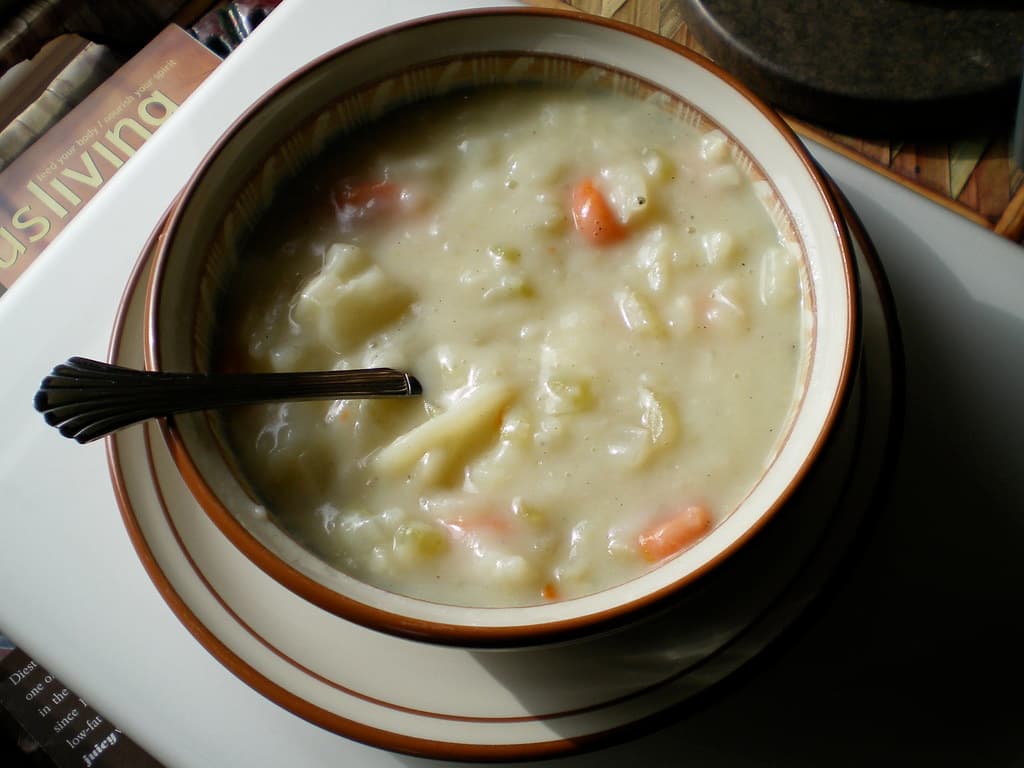
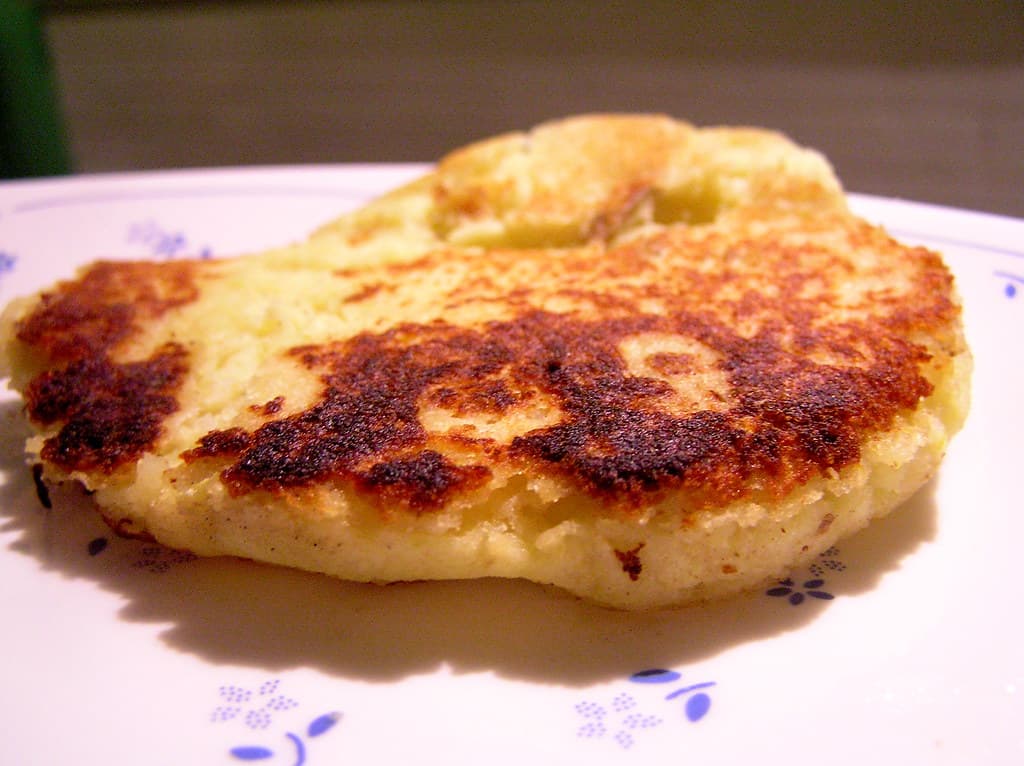
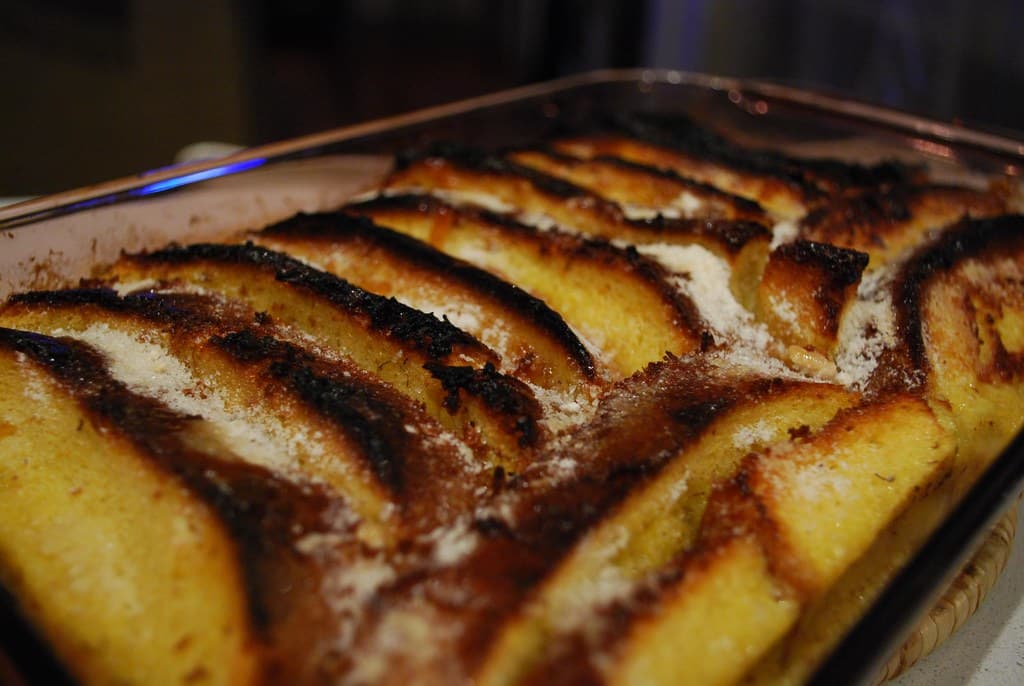
Depression cooking is sometimes remembered through humble recipes: bean soup, potato cakes, cornbread, creamed vegetables, chipped beef, rice pudding, dandelion greens, biscuits, gravy, and casseroles that made use of leftovers. The dishes were plain, but plain is not the same as poor in spirit. A pot of beans could be seasoned with an onion, a scrap of salt pork, a ham bone, pepper, molasses, or nothing at all. Potato cakes turned leftover potatoes into supper. Cornbread filled a plate when meat was gone. Rice pudding and bread pudding made dessert from thrift. soothed children and invalids when stronger food was unavailable. could mean almost any pot built from what remained: vegetables, beans, bones, tomato, cabbage, potatoes, rice, or macaroni.
Food writing from the era often carried a stern vocabulary: economy, substitution, nourishment, waste prevention, balanced meals. Home economists, extension agents, newspapers, radio programs, women's clubs, settlement houses, and relief agencies taught thrift as a public skill. They encouraged menus built around dried beans, milk, potatoes, cabbage, cornmeal, oats, stale bread, leftovers, canned tomatoes, seasonal greens, and every usable scrap. The advice could be practical. It could also sound painfully cheerful to families already cutting everything to the bone. Still, those menus record a serious civic effort: Americans were trying to preserve order, health, and pride while household budgets collapsed.
Urban hunger produced some of the most enduring images of the decade. A Breadline During the Great Depression, preserved by the National Archives, shows people waiting in New York City for free food in 1932, before large federal relief programs had fully taken shape. Soup Kitchen During the Depression, another National Archives primary source, shows soup service in 1936. These images are often used as shorthand for misery, but they also show organization: a line, a room, a serving station, a rule, a promise that someone will be fed. Soup kitchens, city missions, churches, fraternal groups, settlement houses, and private donors became part of the food system because ordinary markets could no longer carry everyone.
The breadline was not just a line for bread. It was a public admission that the private household could no longer absorb a national disaster alone. Standing in line could be humiliating, especially for men and women raised to treat self-support as a badge of honor. Yet the line also made hunger visible. A hungry neighbor behind a closed apartment door could be ignored; a line around a block could not. The Depression forced Americans to look directly at the distance between national abundance and household emptiness.
Relief meals had their own kitchen logic. Soup was common because it scaled. Beans, cabbage, potatoes, rice, tomatoes, bones, onions, and macaroni could be stretched in large kettles. Bread could be sliced and served quickly. Coffee offered warmth, habit, and a little dignity. Doughnuts, when available, carried calories and comfort. These meals were rarely elegant, but they mattered because they met people at the point of need. A bowl passed across a counter could steady a day.
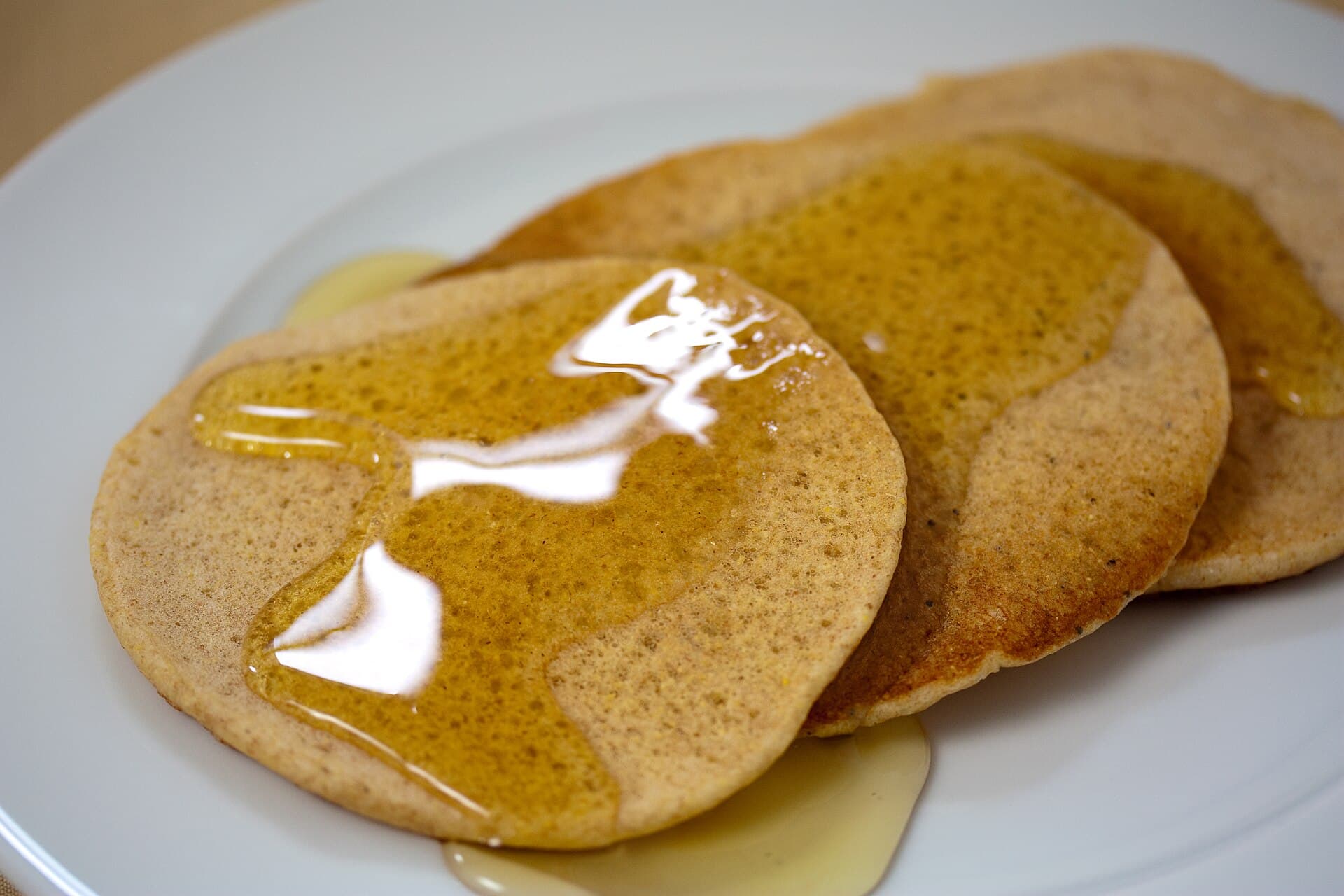
At home, the work was quieter and often more skilled. A Depression cook knew the value of texture as much as price. Beans alone could become monotonous; cornbread changed the meal. Gravy gave biscuits weight. Cabbage soup gave water and vegetables a shape. Oatmeal could be breakfast, filler, or binder. Chipped beef on toast stretched a salty preserved meat across milk sauce and bread. Stale bread could become crumbs, dressing, toast, pudding, or thickener. Leftover potatoes could be mashed, fried, folded with onion, or formed into cakes. The table did not simply shrink; it adapted.
Women carried much of this labor, though the story belongs to whole households. Mothers, grandmothers, older sisters, boarders, aunts, widowers, cafeteria workers, church volunteers, domestic workers, farm wives, and home demonstration agents all kept food moving. Children gathered berries, picked dandelion greens, helped weed gardens, washed jars, carried lunch pails, and learned early that food was work. Men hunted, fished, planted, traded, repaired equipment, stood in relief lines, and took jobs that paid partly in meals. The Depression kitchen was not one person's stage. It was a family workshop under pressure.
Gardens and canning jars became a second bank. In rural places and on the edges of towns, families planted beans, tomatoes, potatoes, greens, squash, corn, onions, cucumbers, and whatever seed could be found. A garden did not solve unemployment, but it turned labor into food when cash was short. The Osage Farms canning photograph in the Library of Congress shows shelves of jars filled from a family garden in Missouri. Those jars were insurance against winter, prices, distance, and bad luck. They also show how beauty entered hard times: neat rows of preserved peaches, tomatoes, beans, pickles, and sauces could make a cupboard look orderly when the rest of life was not.
Foraging belonged to this same practical world. Dandelion greens were not a novelty to people who knew spring hunger. They were free, bitter, nutritious, and available before many garden crops matured. Wild greens, blackberries, nuts, fish, rabbits, squirrels, and gleaned produce helped households extend what they bought. This was old American knowledge, older than the Depression and shared across Native, rural, Black, immigrant, Appalachian, Southern, Midwestern, and Western communities. The crisis did not invent resourcefulness; it demanded more of it.
The Depression also changed the public lunchroom. Schools had fed children before the 1930s in scattered local programs, but the crisis pushed school meals into a larger federal conversation. Farm prices were low, surplus commodities piled up, and children arrived at school hungry. The school lunch program became one place where agricultural policy, child welfare, education, and relief met. A school lunchroom photograph from Charlotte Court House, Virginia, taken in 1943, shows students eating in a cafeteria where many brought lunch from home and bought one or two items. The image sits at the edge of the Depression and World War II, but the pattern had been forged in the hard years: the school table became part of the American food safety net.
That safety net was imperfect and unequal. Race, region, citizenship, local politics, and local prejudice shaped who received help, how much, and with what treatment. Black families in the rural South, Mexican and Mexican American farm workers, Native communities, migrant laborers, and poor white tenants often faced hunger inside older structures of exploitation. Relief could be delayed, segregated, humiliating, or tied to work requirements. Sharecroppers might grow food and still be trapped by debt. Farm workers might harvest crops and still struggle to feed their own children. Those inequalities belonged plainly at the Depression table.
Federal documentary photography made these contradictions visible. The Farm Security Administration and Office of War Information sent photographers across the country to document farms, kitchens, schools, streets, labor camps, stores, churches, and families. New Deal photography did not put food on the table by itself, but it changed what the public could see. A pantry of jars, a stove in a beet-worker kitchen, a child in a lunchroom, a family on a porch, a line outside a relief station: the camera turned economic policy into human evidence.
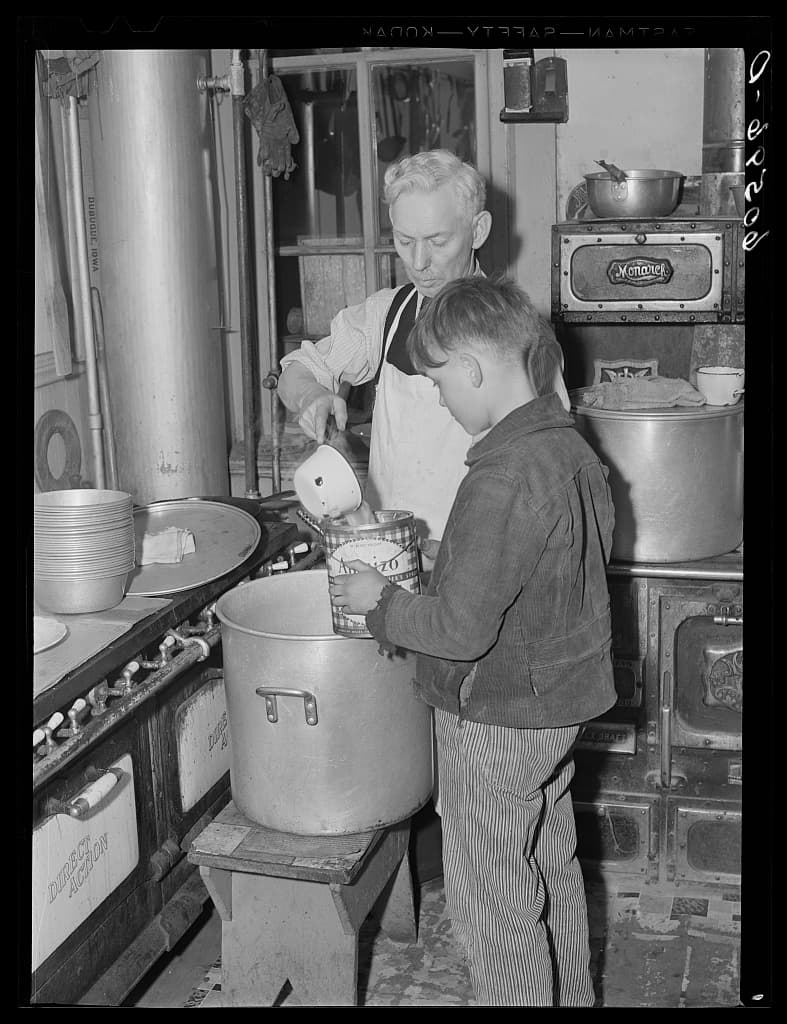
The beet-worker kitchen photograph from Hudson, Colorado shows a stove and rough walls, but the caption tells a larger story: the stove had cost months of family earnings, and the house still leaked badly enough to damage it. Cooking depended on wages, fuel, roof, tools, credit, landlord, weather, transport, and repair as much as it depended on beans, flour, potatoes, and skill. The Depression table was built inside an entire material world.
Depression food was never only a list of cheap dishes. It showed the relationship between household skill and national systems. A family could be thrifty and still hungry. A mother could stretch soup and still need relief. A farmer could grow crops and still lose the farm. A school could teach arithmetic while children needed lunch before they could learn. The country slowly accepted that food security was not only a private virtue. It was public infrastructure.
The recipes that remain from the era carry that knowledge. Bean soup, potato soup, cabbage soup, cornbread, biscuits and gravy, rice pudding, milk toast, bread pudding, oatmeal, creamed chipped beef, dandelion salad, and potato cakes are not museum curiosities. They are working records of scarcity, skill, and endurance. They show how Americans met failure without surrendering the table. They show how much could be done with a pot, a jar, a stove, a garden, a school cafeteria, a church basement, and neighbors who understood that hunger was everybody's business.
The Depression table was shaped by uneven hardship. A farm family with land, a cow, hens, a garden, and canning jars might have food but little cash. A city family with no wages could face rent, heat, milk money, and bread lines all at once. Some households traded labor for food. Others took in boarders, stretched soup, watered gravy, or skipped meals so children could eat.
Home economists, extension agents, newspapers, radio programs, and relief agencies taught thrift as a public skill. They promoted menus built around beans, milk, potatoes, cabbage, cornmeal, oats, stale bread, leftovers, and seasonal produce. The advice could be useful, but it could also sound too cheerful to families who had already cut everything to the bone. Still, the recipes show how seriously Americans tried to preserve order in hard times.
Food relief changed civic expectations. School lunches, surplus commodity distribution, soup kitchens, church pantries, and federal programs helped establish the idea that feeding hungry citizens was not only charity, but a public responsibility. The kitchen became a place where private pride and public aid met, sometimes uneasily.
The dignity of Depression cooking lies in its refusal to waste. Leftover potatoes became cakes. Bones became broth. Beans became tomorrow lunch. Bread became pudding, crumbs, dressing, or thickener. These meals deserve respect because they came from people doing the daily work of hope when hope was expensive.
The Depression table should be remembered without romance. People stretched food because they had to. They shared because neighbors were hungry. They accepted help because children needed to eat. They learned thrift, but they also pushed the nation toward a larger promise: when private cupboards run bare, America does not look away. The recipes are humble. The history is not small.
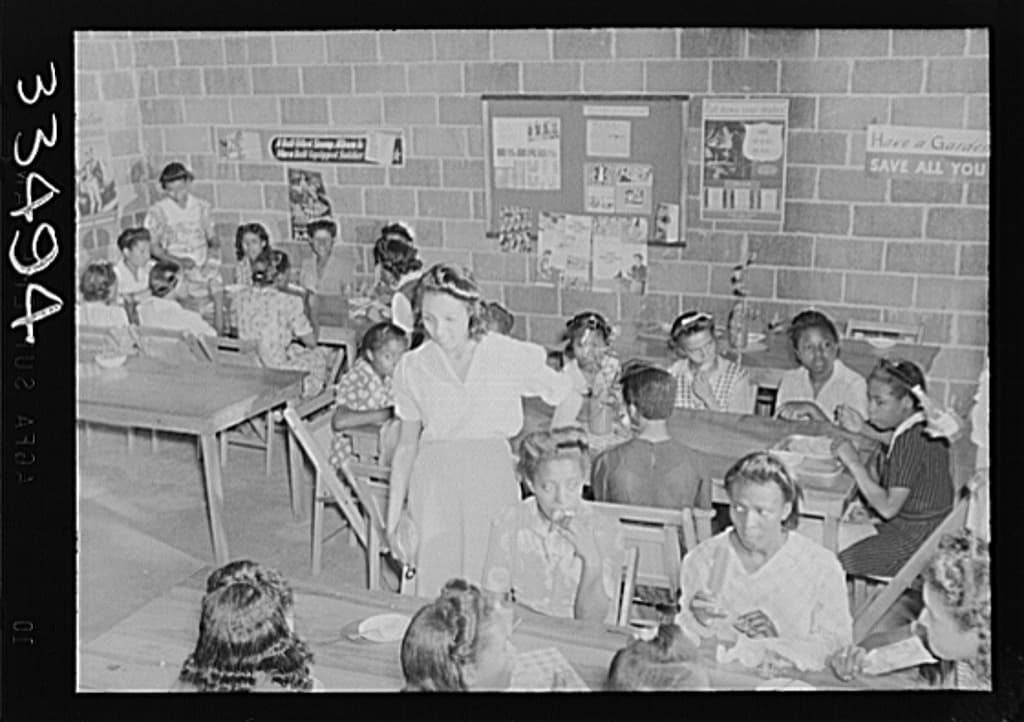
A school lunchroom in wartime Virginia shows a Depression-era shift that lasted: children bringing lunch from home, buying a few cafeteria items, and eating in a public institution that treated food as part of education.
Photo: Philip Bonn photograph, Farm Security Administration/Office of War Information, Library of Congress, no known restrictions. View source
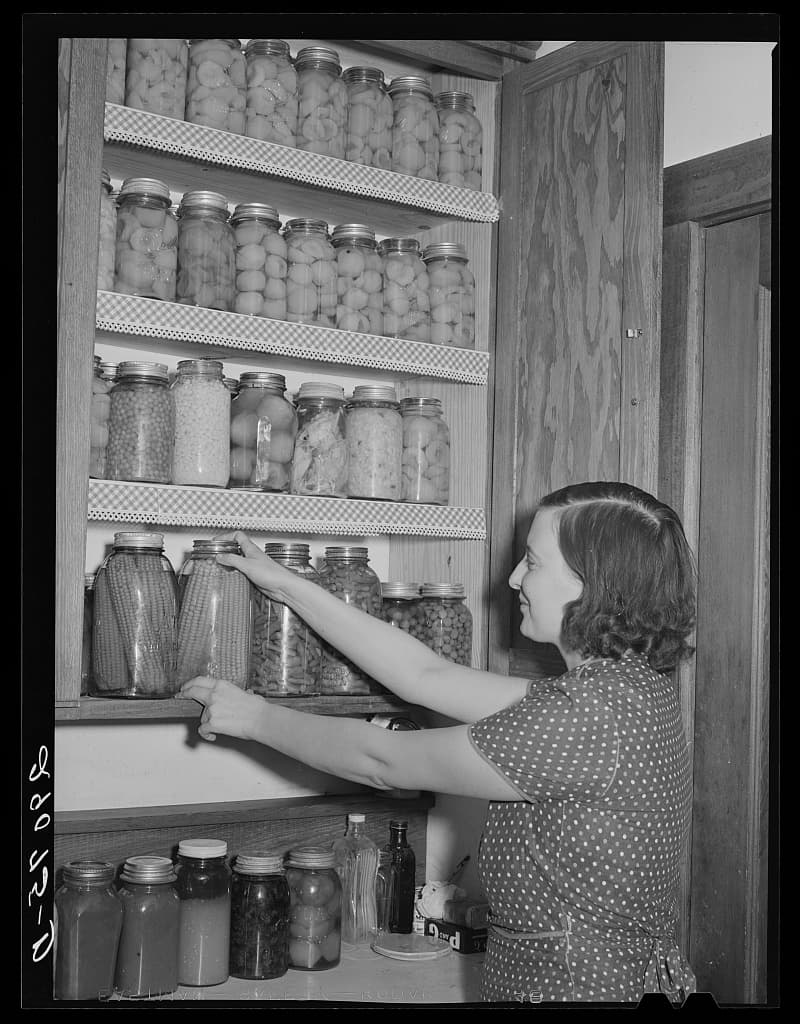
At Osage Farms, Missouri, a pantry of home-canned food made the garden visible through winter. Preservation was not nostalgia; it was household infrastructure.
Photo: Farm Security Administration/Office of War Information photograph, Library of Congress, no known restrictions. View source
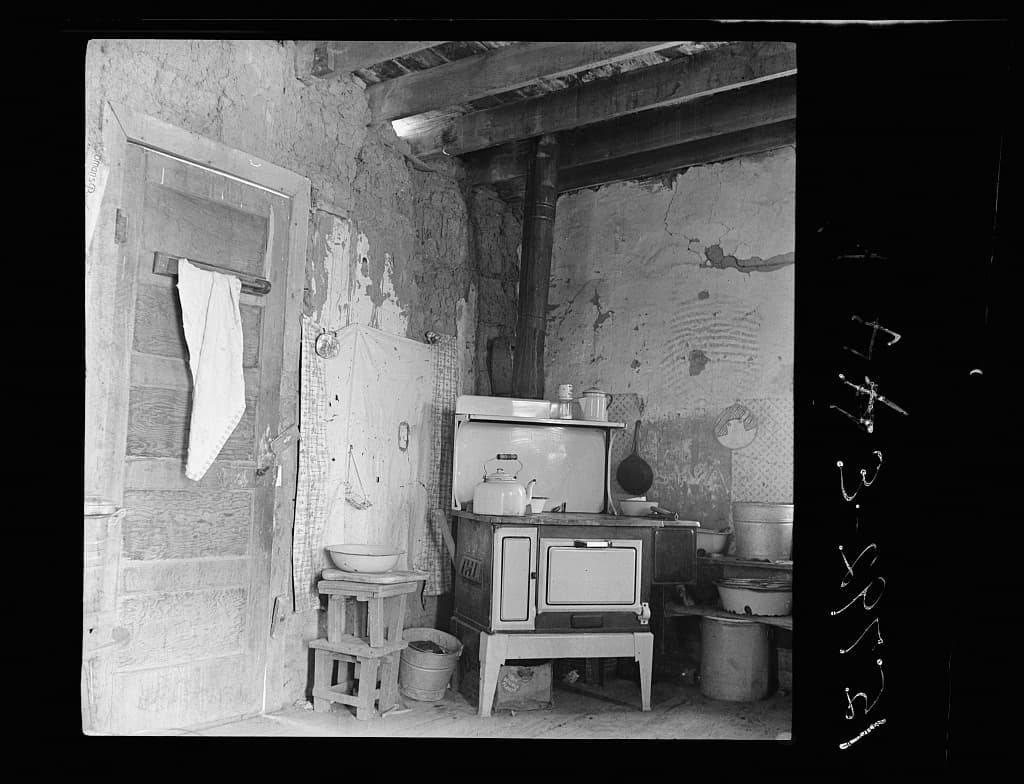
This beet-worker kitchen at Hudson, Colorado shows the pressure behind Depression cooking: wages, housing, fuel, equipment, and repair all shaped what could be served.
Photo: Farm Security Administration/Office of War Information photograph, Library of Congress, no known restrictions. View source
From the archive
Listen and read deeper
DocsTeach, National Archives
A Breadline During the Great Depression
National Archives photograph of people waiting for free food in New York City when private relief still carried much of the urban burden.
Long line of people waiting to be fed.
DocsTeach, National Archives
Soup Kitchen During the Depression
A National Archives primary source showing soup service in 1936, useful for understanding food relief as daily practice rather than abstraction.
Library of Congress
FSA/OWI Black-and-White Negatives
The federal documentary photography project that preserved kitchens, farms, camps, schools, workers, shelves, streets, and relief scenes from the Depression and war years.
DocsTeach, National Archives
The School Lunch Program and the Federal Government
National Archives teaching activity connecting surplus farm commodities, children, federal responsibility, and the public lunchroom.
Recipes from this story
Cook from the chapter
America's Melting Pot
Depression Soup photo coming soon
1929-1939
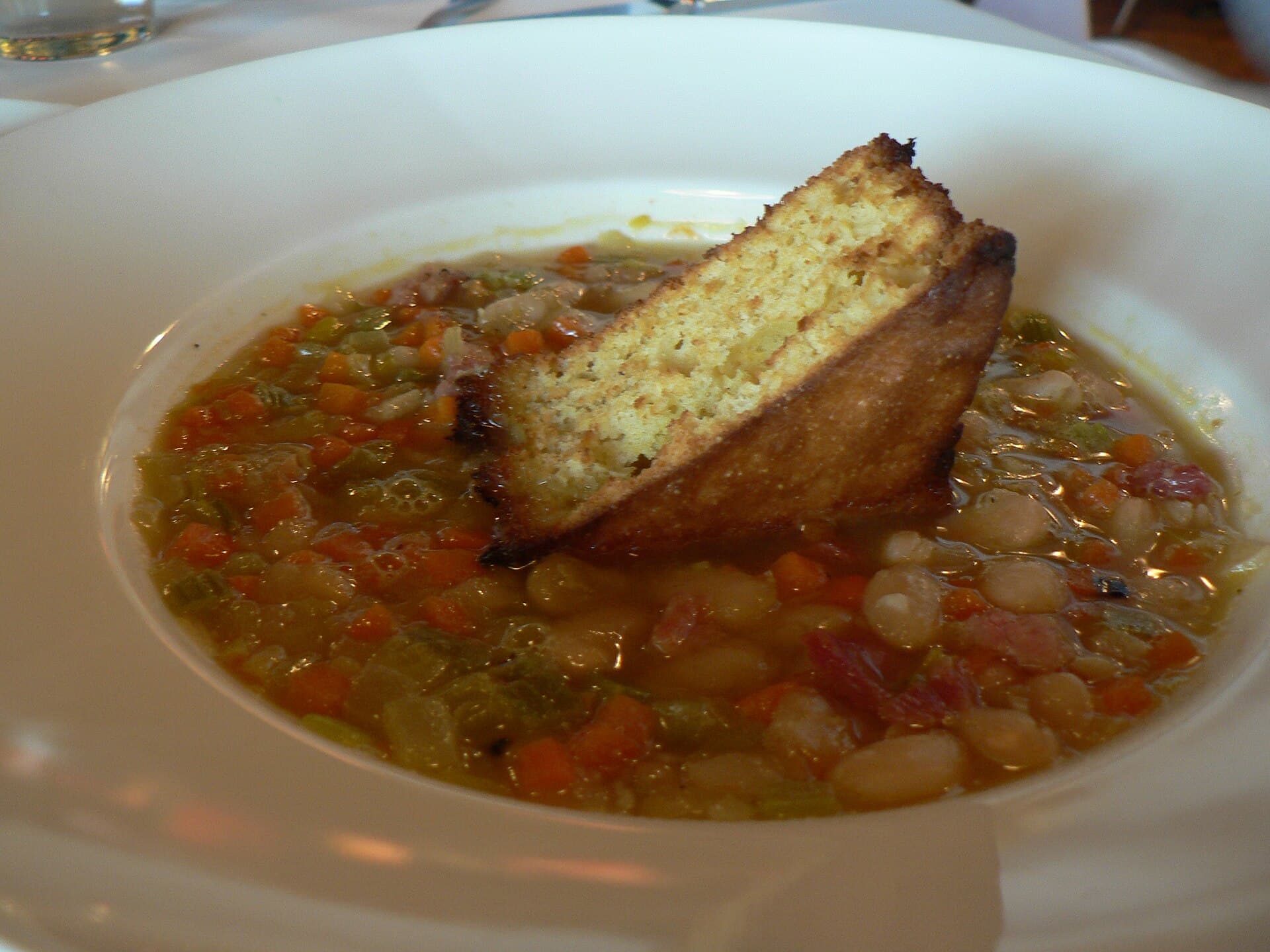
Depression Soup
Depression soup is a simple, hearty soup made from inexpensive vegetables, beans, and pantry staples to stretch limited resources. Rooted in 1930s and 1940s home cooking, it embodies the resourcefulness of families coping with economic hardship.
1800s-present
Bean Soup
Bean soup is a humble American constant: inexpensive dried beans, water or stock, onion, and a ham bone when one was available. During hard times, that kind of pot could stretch flavor and protein across several meals. The U.S. Senate version made navy bean soup famous, but home kitchens kept it practical.
Keep reading
Related stories
1930s Dust Bowl
Dust Bowl Cooking When the Land Blew Away
The Dust Bowl turned farming into a battle with wind, drought, and debt. In migrant camps and roadside kitchens, food became proof that a family was still a family.
World War II
Ration Books, Shared Sacrifice, and Supper
World War II rationing asked Americans to treat fairness as a kitchen duty. Sugar, coffee, meat, fats, gasoline, and other goods were managed so troops and civilians could both be supplied.
2020-2021
COVID-19 and the Reinvention of Food Access
When COVID-19 closed restaurants, schools, and workplaces, Americans saw empty shelves and long food-bank lines, even as federal agencies stressed that the national food supply itself remained strong.