1917-1945
Victory Gardens and the Patriotism of Seeds
War gardens and victory gardens made patriotism practical. Families planted beans, potatoes, peas, onions, tomatoes, and greens so farms, rail lines, and ships could feed soldiers and allies.
Victory gardens turned the home front into a place of practical patriotism. During World War I and again during World War II, Americans were urged to plant vegetables at home, in schoolyards, in vacant lots, and in community plots. The logic was direct: food grown at home relieved pressure on commercial agriculture, transportation, military supply, and allies abroad.
The garden was humble, but the message was grand. Beans, potatoes, peas, onions, carrots, tomatoes, greens, squash, and herbs became part of national service. Families learned to can, dry, pickle, and plan meals around seasonal production. Children were invited into the work. A backyard row could make a household feel connected to soldiers overseas and to neighbors down the street.
Victory gardens also taught Americans that food security is not only a market question. It is a civic question. Seeds, soil, labor, storage, and local knowledge can matter when global systems are strained. Gardening became both nutrition and morale.
Government posters made gardening look bright and orderly, but the work was real. Families had to find seed, prepare soil, fight pests, water consistently, and preserve harvests before spoilage. A victory garden could be beautiful, but it could also fail. The point was not perfection. The point was participation.
Canning and preservation turned gardens into winter food. Tomatoes became jars of sauce or juice. Beans were snapped and canned. Cucumbers became pickles. Fruit became jam. Herbs were dried. Families learned that abundance has to be managed, not merely admired. A full shelf of home-preserved food became a quiet patriotic display.
Victory gardens also connected schools, clubs, churches, cities, and suburbs. Children learned botany and citizenship with dirt under their nails. Communities turned vacant lots into productive ground. A nation at war asked ordinary people to see food as shared infrastructure, and millions answered with shovels.
The idea still has power because it joins independence with neighborliness. Growing food does not reject national systems; it strengthens them by adding local resilience. A tomato plant on a back fence can remind a household that the country is not only something watched on the news. It is something tended.
War gardens began in World War I with an urgent practical message: plant food so commercial farms, railroads, ships, and canneries could support soldiers and allies. Posters made the work look clean and cheerful, but gardening required sweat, seed, tools, water, pest control, and patience. A patriotic poster could start a garden; only steady labor could feed a family from it.
World War II renewed the idea on a larger home-front scale. Families, schools, companies, clubs, churches, and city governments planted yards, parks, vacant lots, and community plots. Tomatoes, beans, peas, carrots, onions, potatoes, squash, greens, corn, herbs, and berries turned spare ground into food. The victory garden was not only symbolic. It added fresh produce at a time when commercial food had to serve civilians, troops, and allies at once.
Preservation made the garden strategic. Canning tomatoes, beans, peaches, pickles, relishes, jams, and sauces stretched summer into winter. Drying, root-cellaring, salting, and careful storage turned harvest into planning. A garden that spoiled on the vine was morale; a garden that filled shelves was infrastructure.
Children learned citizenship with dirt under their nails. School gardens taught botany, nutrition, arithmetic, discipline, and service. Youth groups weighed produce, kept records, pulled weeds, gathered scrap, and helped families understand that food was part of national defense. The lesson was concrete: small hands could contribute to a large cause.
Victory gardens also carried an older American lesson from Native agriculture, frontier gardens, immigrant kitchen gardens, and Depression survival plots. Food security improves when households and communities know how to grow, preserve, and share. The wartime slogan was modern, but the skill was old.
The victory garden remains powerful because it joins independence with neighborliness. Planting food does not reject national systems; it strengthens them by adding local resilience. A row of beans or tomatoes can remind a household that the country is not only something watched from a distance. It is something tended.
The garden movement depended on instruction as much as inspiration. Pamphlets, posters, extension bulletins, newspapers, seed companies, radio talks, and local clubs taught spacing, planting dates, compost, pest control, and canning safety. Patriotic feeling got people outside; practical knowledge kept plants alive.
Urban gardens changed the look of wartime cities. Vacant lots, apartment courtyards, rooftops, school grounds, parks, and factory land became places of production. A city garden could be modest, but it reminded residents that food did not begin at the store. Soil, labor, and weather were still part of dinner even in dense neighborhoods.
Women carried much of the preservation work. Canning required clean jars, lids, heat, timing, pressure or water-bath knowledge, and attention to spoilage. A shelf of jars represented many hours of washing, trimming, blanching, packing, boiling, cooling, labeling, and guarding against waste. Victory gardening asked households to become growers and processors at once.
The movement also contained inequality. Families with yards, tools, time, and knowledge could do more than families in crowded housing or unstable work. Rural families sometimes had experience that city campaigns had to teach from scratch. Still, the broad effort gave many Americans a shared vocabulary of participation: plant, tend, preserve, share.
Victory gardens did not end hunger or solve wartime logistics by themselves, but they strengthened morale and habits of self-provisioning. They told citizens that food was not only something bought. It was something planned, protected, and contributed.
Seeds themselves became patriotic objects. A packet of beans or tomato seed was small enough to fit in a pocket, but it carried a promise of labor, harvest, and contribution. Saving seed from one season to another linked the war garden to older household economies in which seed was not merely purchased but stewarded.
The home-front garden also changed how people talked about waste. Vegetable peelings could become compost. Surplus could become jars. Odd-shaped produce could still become soup. Garden labor made waste feel more personal because the cook knew what it had taken to grow the food in the first place.
The story still resonates because it is hopeful without being sentimental. A garden cannot solve every crisis, but it can give citizens something concrete to do. In wartime America, the act of planting was a small declaration: we will feed ourselves, help one another, and keep faith with the country.
From the archive
Listen and read deeper
Library of Congress
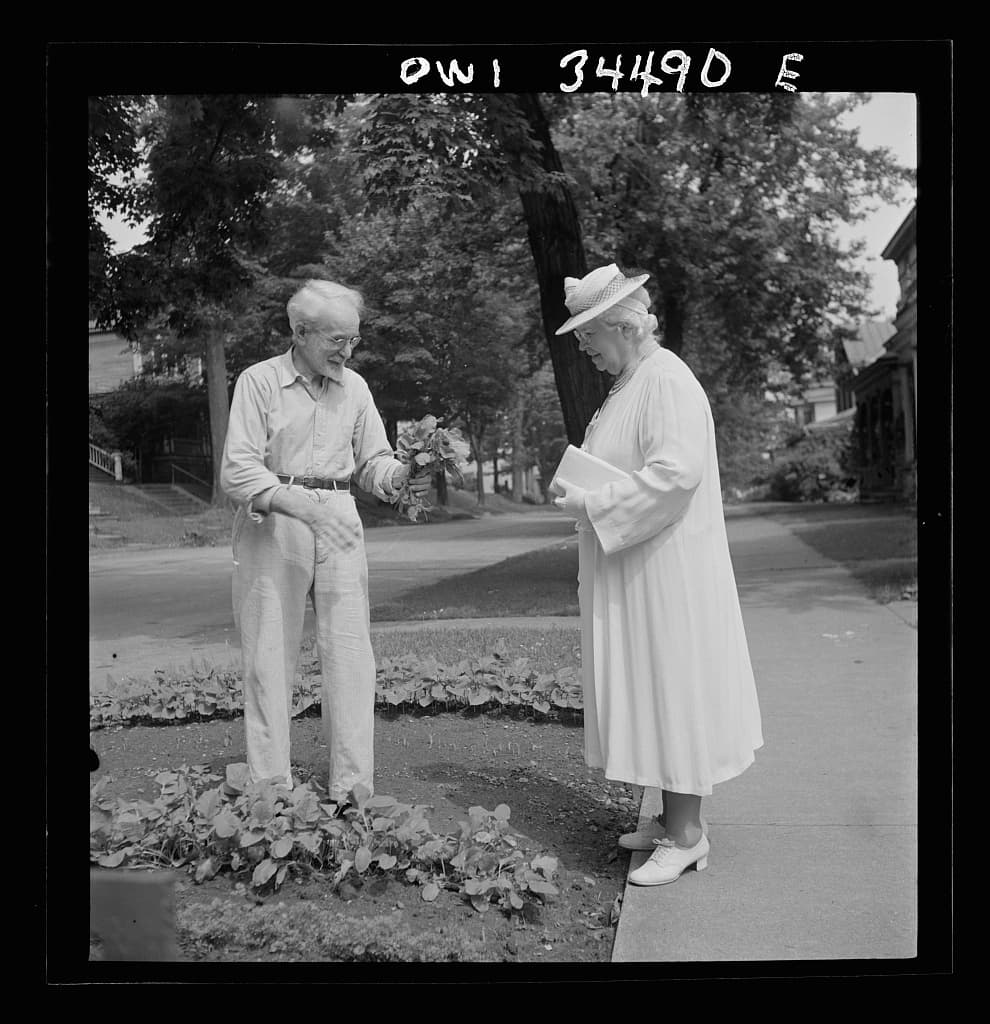
Oswego Victory Garden, 1943
Marjory Collins photographed an Oswego, New York citizen showing his wife vegetables from his victory garden as she started for church.
Library of Congress
War Gardens Over the Top
Library of Congress poster record for a World War I garden campaign image urging Americans to plant food.
Library of Congress
American Treasures: War Gardens
Library of Congress exhibit context for war-garden campaigns and home-front food production.
Recipes from this story
Cook from the chapter
America's Melting Pot
Three Sisters Stew photo coming soon
pre-1776-present
Three Sisters Stew
Three Sisters Stew features the traditional Indigenous American agricultural trio of corn, beans, and squash simmered into a hearty, nourishing stew. Reflecting centuries-old Native foodways, this dish celebrates indigenous crops and culinary traditions from Expansion through early 19th century America, underscoring sustainable agriculture and seasonal cooking.
pre-1776-present
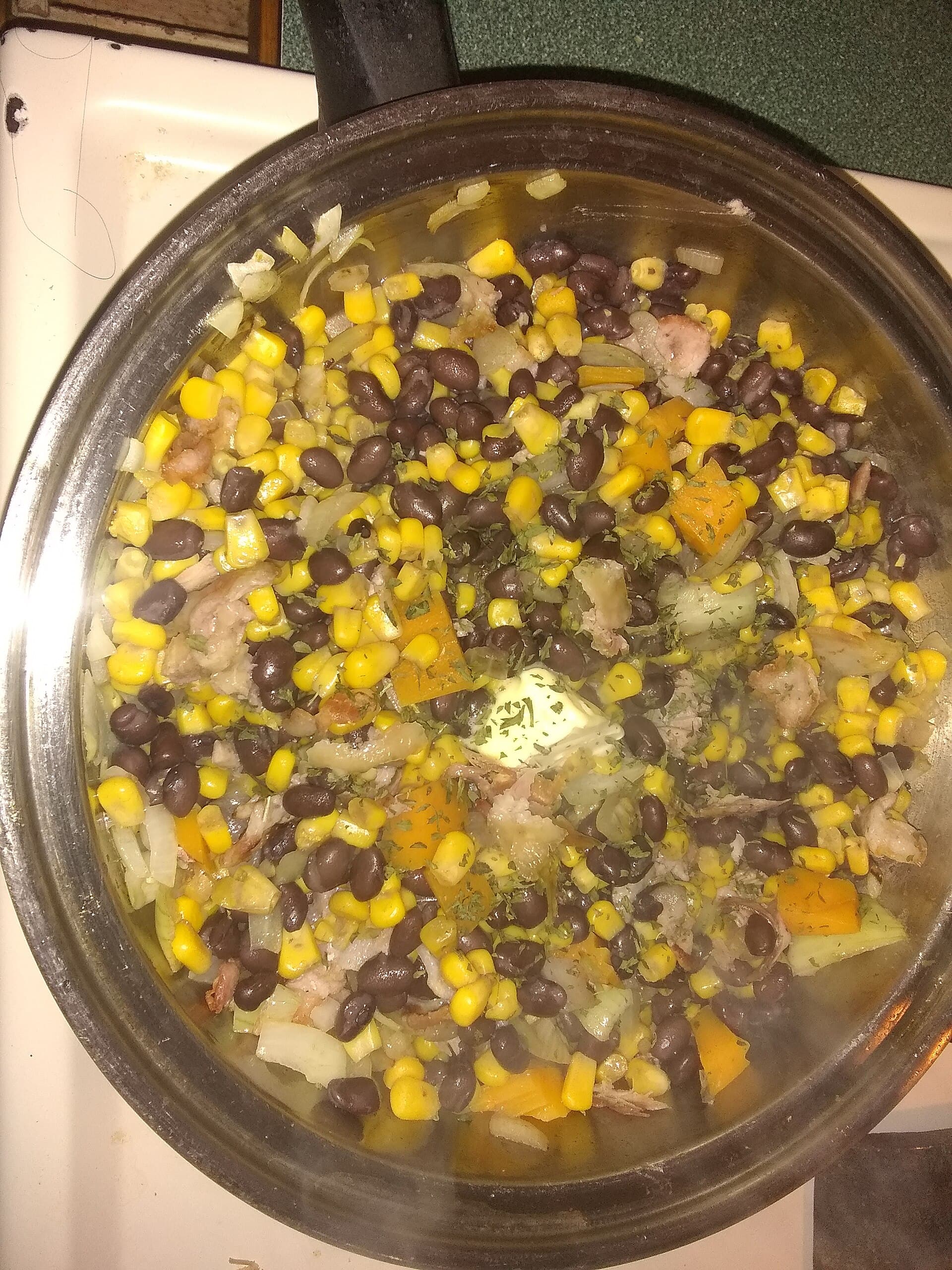
Succotash
Succotash is a hearty vegetable stew of corn and lima beans, with variations including tomatoes, peppers, or other vegetables. Rooted in early American and Native food traditions, it was commonly served throughout the Revolutionary era as a simple, nutrient-rich side or main dish.
Keep reading
Related stories
Before 1776
The First American Table
American culinary history begins with Native nations that knew the land intimately. Corn, beans, squash, wild rice, maple, cranberries, pecans, peppers, tomatoes, and hundreds of regional foods were cultivated, gathered, preserved, traded, and honored long before the republic.
World War II
Ration Books, Shared Sacrifice, and Supper
World War II rationing asked Americans to treat fairness as a kitchen duty. Sugar, coffee, meat, fats, gasoline, and other goods were managed so troops and civilians could both be supplied.
2020-2021
COVID-19 and the Reinvention of Food Access
When COVID-19 closed restaurants, schools, and workplaces, Americans saw empty shelves and long food-bank lines, even as federal agencies stressed that the national food supply itself remained strong.