Before 1776
The First American Table
American culinary history begins with Native nations that knew the land intimately. Corn, beans, squash, wild rice, maple, cranberries, pecans, peppers, tomatoes, and hundreds of regional foods were cultivated, gathered, preserved, traded, and honored long before the republic.
Before there was a United States, there were Native nations whose food knowledge was precise, local, and deeply tied to responsibility for land and water. American ingredients did not appear by accident. Corn, beans, squash, wild rice, maple, cranberries, pecans, chile peppers, tomatoes, cacao, potatoes, pumpkins, and sunflowers came from generations of observation, selection, trade, ceremony, and daily work. Many of the foods now thought of as ordinary pantry staples are part of an older American story.
The first thing to understand is scale. Indigenous foodways were not one dish, one crop, or one romantic image of the past. They were systems. A food system includes seeds, soil, water, land access, harvesting rights, storage, trade, cooking, ceremony, language, medicine, and law. It includes who teaches a child to gather berries, who knows when salmon return, who protects a rice bed, who saves seed corn, who controls a herd, and who decides what food is served to elders. Food was never merely fuel. It was governance, science, health, family, and identity.
Corn alone carries a continent of history. Indigenous farmers transformed wild grasses into maize through patient selection long before European contact. Maize then moved through trade, diplomacy, migration, and adaptation. It became hominy, mush, tortillas, tamales, cornbread, ash cakes, soups, stews, parched corn, and ceremonial foods. When later Americans ate corn pone, grits, johnnycakes, succotash, or corn chowder, they were eating from Indigenous agricultural achievement, even when the debt went unnamed.
The Three Sisters are one of the clearest examples of that achievement. Corn rises as a living pole, beans climb and return nitrogen to the soil, and squash shades the ground to hold moisture and resist weeds. The system is agricultural, nutritional, and cultural at the same time. It feeds bodies with complementary nutrients and teaches a way of seeing abundance as cooperation rather than extraction. A field planted this way is not just efficient. It is a philosophy made visible in leaves, vines, blossoms, and seed.
Native foodways were never one single cuisine. Coastal communities relied on fish, shellfish, seaweed, and salt. Woodland and prairie communities used game, nuts, berries, corn, beans, squash, and maple. In the Southwest, corn, beans, squash, chiles, and drought-wise farming carried communities through harsh country. In the North, wild rice beds were and remain places of food, identity, and law. Each region had its own intelligence.
Native agriculture means more than ancient crops. It means managed landscapes and living expertise. Indigenous people used controlled burning, irrigation, terracing, seed selection, companion planting, fish weirs, clam gardens, oak stewardship, bison relationships, berry management, maple sugaring, and careful harvesting protocols. These practices were shaped by place. They responded to drought, flood, fire, migration, animal behavior, and spiritual responsibility. The intelligence was not separate from culture. It was culture.
Native ingredients are not simply ingredients that happen to come from the Americas. They are foods with histories and relationships attached. Wild rice is not just a grain in a soup; for Anishinaabe communities it is manoomin, tied to migration stories, treaty rights, harvesting knowledge, and water protection. Maple is not just sweetener; it is seasonal labor, tree knowledge, boiling, family, and ceremony. Bison is not just lean meat; it is tied to Plains nations, near-eradication, restoration, and sovereignty. Blue corn, acorns, cranberries, squash, beans, chiles, salmon, shellfish, and berries each carry place-specific stories.
Native food sovereignty is the right and ability of Native nations and communities to feed their own people on their own terms. USDA describes Indigenous Food Sovereignty as the ability for tribal nations and communities to feed their own people on their own terms. Indian Health Service frames Tribal food sovereignty as the right of Tribal Nations to control their food systems, including cultivation, harvesting, production, and distribution. In practical terms, that can mean saving seeds, restoring bison herds, protecting wild rice waters, buying from Native producers, shaping school meals, running tribal farms, teaching traditional food knowledge, or redesigning federal food programs so Native communities choose foods that fit health, culture, and place.
That word sovereignty matters. Many Native food systems were damaged by land theft, forced removal, boarding schools, allotment, environmental destruction, suppressed harvesting rights, commodity food dependency, and federal policies that separated people from traditional foods. Food sovereignty is not nostalgia. It is repair. It asks who controls land, water, seeds, animals, food dollars, and nutrition programs. It asks whether Native children can learn the foods of their own people and whether elders can eat foods that carry memory and health.
Native continuity means the first American table did not disappear into museums. It continues in tribal farms, fisheries, seed rematriation work, Native-owned restaurants, community gardens, bison restoration, wild rice harvests, salmon defense, maple camps, language programs, family kitchens, and home cooks who keep old foods present while adapting to modern life. Continuity is not freezing culture in the past. It is the right to keep living, changing, teaching, and feeding the next generation.
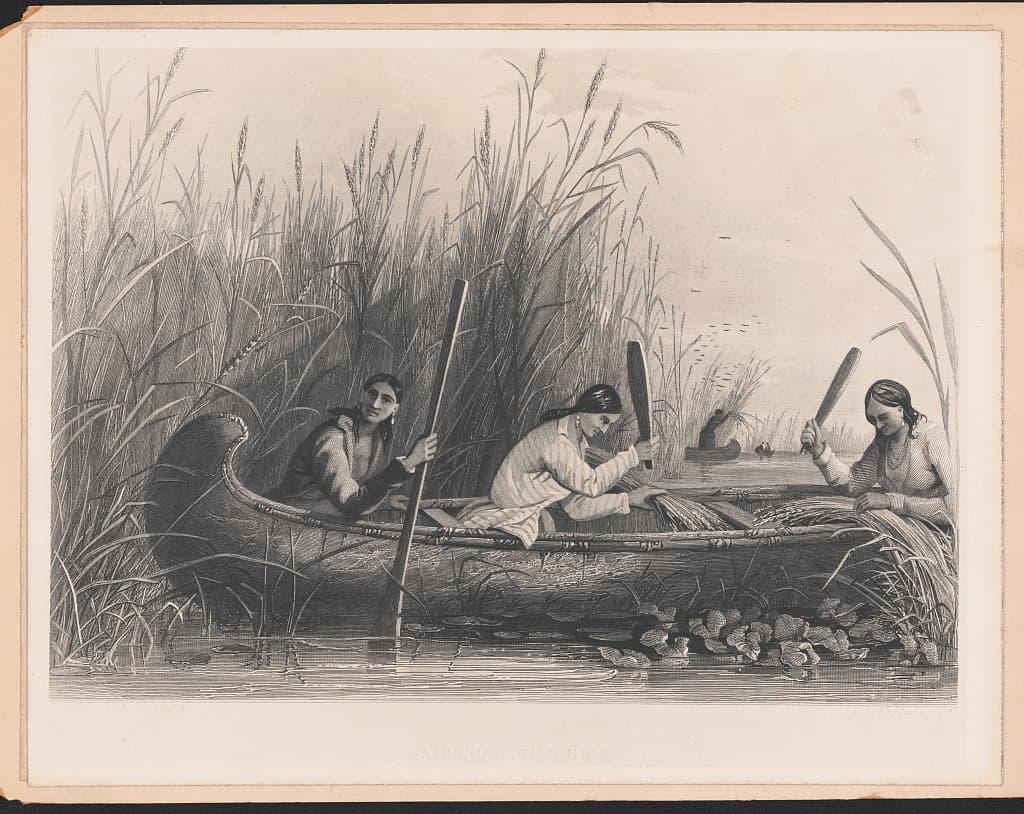
Wild rice gives the story a sharp northern example. In Anishinaabe country, manoomin is harvested from canoes with knocking sticks, cleaned, parched, danced or threshed, winnowed, and cooked with knowledge passed through families and communities. The grain grows in water, but the food is also a legal and cultural relationship. Harvesting rules, water quality, treaty rights, and language all meet in the rice bed. A bowl of wild rice soup can carry more than flavor; it can carry a people's continuing responsibility to a place.
In the Southwest, dryland farming produced another kind of genius. Pueblo, Hopi, Zuni, Tohono O'odham, Diné, and other communities learned to read rainfall, soil, seed depth, floodwater, terraces, waffle gardens, and drought-resistant corn. Blue corn, beans, squash, chiles, melons, and desert foods taught patience and restraint. These crops were not simply planted in difficult country. They were bred, protected, selected, cooked, and honored there.
Along the coasts and rivers, food knowledge followed tides, spawning runs, shellfish beds, wetlands, and seasonal gathering grounds. Salmon, oysters, clams, crabs, seaweed, eels, sturgeon, and river fish were not random resources. They were managed through timing, technology, ceremony, and restraint. Nets, weirs, traps, smoking, drying, and communal distribution all made water into a pantry without reducing it to property.
The first American table also carried trade. Corn moved. Beans moved. Chiles moved. Cacao, squash, sunflower, cranberries, maple sugar, tobacco, pottery, baskets, salt, dried fish, hides, and tools moved through networks older than European maps. Trade spread foods and techniques, but it also spread stories, obligations, marriages, diplomacy, and taste. American cooking began as a continent of connected foodways, not as isolated local curiosities.
Colonization broke many of these systems, but it did not erase them. Removal, allotment, boarding schools, missionization, military violence, dams, mining, commercial hunting, and commodity-food policy all damaged Native food access. Still, Native families kept planting, gathering, fishing, cooking, saving seed, speaking food words, and teaching children. The continuity is not a footnote. It is the reason these foods remain living American foods.
Today, Native chefs, seed keepers, farmers, fishers, ranchers, health workers, educators, and elders are rebuilding public knowledge around Indigenous food. Tribal bison programs, wild rice protection, seed rematriation, Native-owned restaurants, school meal projects, community gardens, and food-sovereignty programs make old knowledge visible in modern forms. The first American table is still present wherever land, water, food, and responsibility are kept together.
This story matters because American cooking often starts its memory too late. The national table was already old when the republic was young. To honor American culinary history honestly is to begin with Native food sovereignty, Native agriculture, Native ingredients, and Native continuity. The first American table did not vanish. It is still feeding the country, and it still has lessons for anyone who cares about land, health, memory, and belonging.
From the archive
Listen and read deeper
Library of Congress
Gathering Wild Rice
Seth Eastman lithograph showing Native people harvesting wild rice from a canoe, a visual reminder that American food history begins in specific waters and communities.
USDA
Indigenous Food Sovereignty Initiative
USDA overview of Native food sovereignty work, including the right of tribal communities to feed themselves on their own terms.
Recipes from this story
Cook from the chapter
America's Melting Pot
Three Sisters Stew photo coming soon
pre-1776-present
Three Sisters Stew
Three Sisters Stew features the traditional Indigenous American agricultural trio of corn, beans, and squash simmered into a hearty, nourishing stew. Reflecting centuries-old Native foodways, this dish celebrates indigenous crops and culinary traditions from Expansion through early 19th century America, underscoring sustainable agriculture and seasonal cooking.
pre-1776-present
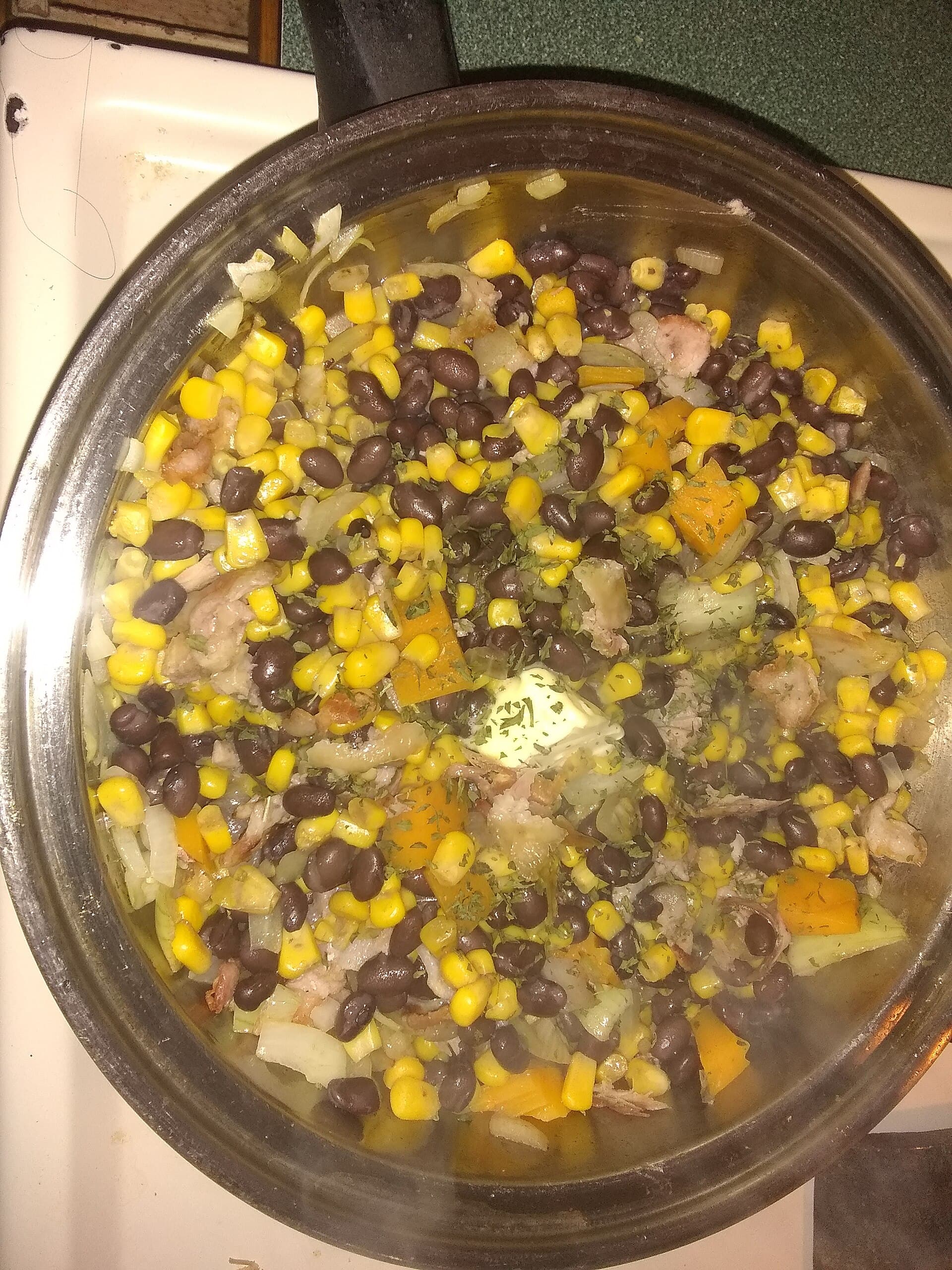
Succotash
Succotash is a hearty vegetable stew of corn and lima beans, with variations including tomatoes, peppers, or other vegetables. Rooted in early American and Native food traditions, it was commonly served throughout the Revolutionary era as a simple, nutrient-rich side or main dish.
Keep reading
Related stories
1880s-today
The Migrant Table Makes America Larger
Immigrant and migrant families kept home alive through food, then changed the country by sharing it. Delis, taquerias, noodle shops, fish fries, bakeries, church kitchens, bodegas, food trucks, farmers markets, and family restaurants made America bigger.
1917-1945
Victory Gardens and the Patriotism of Seeds
War gardens and victory gardens made patriotism practical. Families planted beans, potatoes, peas, onions, tomatoes, and greens so farms, rail lines, and ships could feed soldiers and allies.
2020-2021
COVID-19 and the Reinvention of Food Access
When COVID-19 closed restaurants, schools, and workplaces, Americans saw empty shelves and long food-bank lines, even as federal agencies stressed that the national food supply itself remained strong.